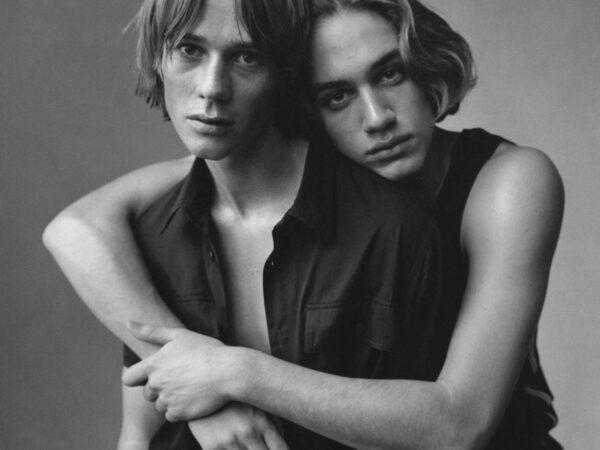
The Academy Award nominated documentary ‘Minding the Gap’ uses skateboarding to probe masculinity, class, and trauma.
In our collective mind’s eye, skateboarding is for skinny young boys with long hair, threadbare jeans, tanned skin, and cheeky smiles. They zip down the street, glide into the sunset, and move as lightly as the air they leap through. We think of beanies and bad bleached hair, punk music and zines, sneakers and Thrasher hoodies. We imagine skateboarding to be cool and irreverent, an escape from everyday norms and restraints. But we rarely stop to ask what it might operate as an escape from.
In Bing Liu’s Academy Award nominated documentary, Minding the Gap, skateboarding unites a group of frustrated young men in the economically depressed town of Rockford, Illinois. Rockford is characterized by its stagnancy after the exodus of the manufacturing industry. The film reports that up to 49% of Rockford residents make less than $15 per hour and that the town has one of the highest emigration rates nationwide. Rockford has also been marred by high instances of violence—a quarter of which are domestic. As Liu turns his camera towards two of the skaters he grew up with, he reveals a deep-rooted cycle of trauma.
Above The Fold

Sam Contis Studies Male Seclusion

Slava Mogutin: “I Transgress, Therefore I Am”

The Present Past: Backstage New York Fashion Week Men’s Spring/Summer 2018

Pierre Bergé Has Died At 86

Falls the Shadow: Maria Grazia Chiuri Designs for Works & Process

An Olfactory Memory Inspires Jason Wu’s First Fragrance

Brave New Wonders: A Preview of the Inaugural Edition of “Close”

Georgia Hilmer’s Fashion Month, Part One

Modelogue: Georgia Hilmer’s Fashion Month, Part Two

Surf League by Thom Browne

Nick Hornby: Grand Narratives and Little Anecdotes

The New Helmut

Designer Turned Artist Jean-Charles de Castelbajac is the Pope of Pop

Splendid Reverie: Backstage Paris Haute Couture Fall/Winter 2017
Tom Burr Cultivates Space at Marcel Breuer’s Pirelli Tire Building

Ludovic de Saint Sernin Debuts Eponymous Collection in Paris

Peaceful Sedition: Backstage Paris Fashion Week Men’s Spring/Summer 2018
Ephemeral Relief: Backstage Milan Fashion Week Men’s Spring/Summer 2018

Olivier Saillard Challenges the Concept of a Museum

“Not Yours”: A New Film by Document and Diane Russo

Introducing: Kozaburo, 2017 LVMH Prize Finalist

Introducing: Marine Serre, 2017 LVMH Prize Finalist

Conscious Skin

Escapism Revived: Backstage London Fashion Week Men’s Spring/Summer 2018

Introducing: Cecilie Bahnsen, 2017 LVMH Prize Finalist

Introducing: Ambush, 2017 LVMH Prize Finalist

New Artifacts

Introducing: Nabil Nayal, 2017 LVMH Prize Finalist

Bringing the House Down

Introducing: Molly Goddard, 2017 LVMH Prize Finalist

Introducing: Atlein, 2017 LVMH Prize Finalist

Introducing: Jahnkoy, 2017 LVMH Prize Finalist

LVMH’s Final Eight

Escaping Reality: A Tour Through the 57th Venice Biennale with Patrik Ervell

Adorned and Subverted: Backstage MB Fashion Week Tbilisi Autumn/Winter 2017

The Geometry of Sound

Klaus Biesenbach Uncovers Papo Colo’s Artistic Legacy in Puerto Rico’s Rainforest

Westward Bound: Backstage Dior Resort 2018

Artist Francesco Vezzoli Uncovers the Radical Images of Lisetta Carmi with MoMA’s Roxana Marcoci

A Weekend in Berlin

Centered Rhyme by Elaine Lustig Cohen and Hermès

How to Proceed: “fashion after Fashion”

Robin Broadbent’s Inanimate Portraits

“Speak Easy”

Revelations of Truth

Re-Realizing the American Dream

Tomihiro Kono’s Hair Sculpting Process

The Art of Craft in the 21st Century

Strength and Rebellion: Backstage Seoul Fashion Week Autumn/Winter 2017

Decorative Growth

The Faces of London

Document Turns Five
Synthesized Chaos: “Scholomance” by Nico Vascellari

A Whole New World for Janette Beckman

New Ceremony: Backstage Paris Fashion Week Autumn/Winter 2017
New Perspectives on an American Classic

Realized Attraction: Backstage Milan Fashion Week Autumn/Winter 2017

Dematerialization: “Escape Attempts” at Shulamit Nazarian

“XOXO” by Jesse Mockrin

Brilliant Light: Backstage London Fashion Week Autumn/Winter 2017

The Form Challenged: Backstage New York Fashion Week Autumn/Winter 2017

Art for Tomorrow: Istanbul’74 Crafts Postcards for Project Lift

Inspiration & Progress

Paskal’s Theory of Design

On the Road

In Taiwan, American Designer Daniel DuGoff Finds Revelation

The Kit To Fixing Fashion
The Game Has Changed: Backstage New York Fashion Week Men’s Autumn/Winter 2017

Class is in Session: Andres Serrano at The School

Forma Originale: Burberry Previews February 2017

“Theoria”

Wearing Wanderlust: Waris Ahluwalia x The Kooples

Approaching Splendor: Backstage Paris Haute Couture Spring/Summer 2017

In Florence, History Returns Onstage

An Island Aesthetic: Loewe Travels to Ibiza

Wilfried Lantoine Takes His Collection to the Dancefloor

A Return To Form: Backstage New York Fashion Week Spring/Summer 2018

20 Years of Jeremy Scott

Offline in Cuba

Distortion of the Everyday at Faustine Steinmetz

Archetypes Redefined: Backstage London Fashion Week Spring/Summer 2018

Spring/Summer 2018 Through the Lens of Designer Erdem Moralıoğlu

A Week of Icons: Backstage Milan Fashion Week Spring/Summer 2018

Toasting the New Edition of Document

Embodying Rick Owens

Prada Channels the Wonder Women Illustrators of the 1940s
Andre Walker’s Collection 30 Years in the Making

Fallen From Grace, An Exclusive Look at Item Idem’s “NUII”

Breaking the System: Backstage Paris Fashion Week Men’s Autumn/Winter 2017

A Modern Manufactory at Mykita Studio

A Wanted Gleam: Backstage Milan Fashion Week Men’s Autumn/Winter 2017

Fashion’s Next, Cottweiler and Gabriela Hearst Take International Woolmark Prize

Beauty in Disorder: Backstage London Fashion Week Men’s Autumn/Winter 2017

“Dior by Mats Gustafson”

Prada’s Power

George Michael’s Epochal Supermodel Lip Sync

The Search for the Spirit of Miss General Idea

A Trace of the Real

Wear and Sniff

Underwater, Doug Aitken Returns to the Real
Zack and Keire grew up at the skatepark in Rockford with the film’s director. 10 years after their childhood together, Liu returns as Zack, now 23, is on the cusp of parenthood, and Keire, now 17, is reckoning with the death of his father. Both Zack and Keire reveal to Liu that they did not feel safe at home as children. “Today, they would call it child abuse,” Keire explains. As the film continues, the director revisits his own childhood and confesses that the skate park was his refuge; making skate videos is also how he first began filmmaking, and thus skateboarding catalyzed his literal escape from Rockford.
The film’s skating sequences palpably relieve the tension—both for the boys and for the audience. Liu scores these sequences with elegant piano music, a choice that plunges them into a meditative trance. It softens the hard edge of the sport’s reputation and suddenly, we see skateboarding as they do—tranquil, healing, and beautiful.
As a sport, skating is defined by freedom, creative movement, and a pursuit of sensation—uses of the body that stand in opposition to Western masculinity’s conformity. Skaters imagine their bodies outside of the boundaries of urban design and re-appropriate environments designed to segregate or gentrify, imprinting their bodies on the city landscape. This is how the sport empowers working class youth to pursue pleasure in spaces that they have been excluded from.
Nonprofits have utilized these benefits to inspire young people around the country. In Phoenix, Arizona, Skate After School was founded by a group of skaters as a community project that has bloomed into a full-fledged non-profit, providing access to skateboarding at eight elementary schools in low-income neighborhoods. Executive Director and co-founder Ryan Lay, a professional skateboarder, says that in addition to increasing access to healthy activity and community engagement, skating is also an important mode of transportation, expanding geographical boundaries for those on the margins.
“Skaters imagine their bodies outside of the boundaries of urban design and re-appropriate environments designed to segregate or gentrify, imprinting their bodies on the city landscape.”
“We’ve heard the kids give testimonials about how the skateboard has opened up their neighborhood,” Lay explains. “Skateboarding is this axis, this tool, to interact with your environment in a whole new way and expand the horizon of what is possible.” Skate After School not only instructs young skateboarders, but also preaches what Lay feels are the sport’s core values: generosity, respect, innovation, and persistence. Many of its students go on to volunteer as instructors once they have aged out of the program and have become involved in the Phoenix skating community; in Lay’s words, they are “figuring out their relationship to the greater skateboarding culture as a teenager, and that’s really exciting for us.”
In Skate Life: re-imagining white masculinity, author Emily Chivers Yochim explains why skateboarding holds such a strong appeal to social ‘outsiders.’ As a subculture, skating is predicated on community rather than competition, which makes it unlike most mainstream sports. Its emphasis on self-expression and risk-taking demands vulnerability, more so than hegemonic machismo.
Likewise, American mythology equates masculinity with providing an income, and poverty can make this prescribed narrative of manhood seem out of reach. At the beginning of Minding the Gap, Zack says, “Your whole life, society tells you, ‘be a man,’ and ‘be tough’ […] and you don’t grow up thinking that’s the way you are. When you’re a kid, you just do, you just act, and then somewhere along the line, everyone loses that.” Keire, Zack, and the other skaters in the film take pleasure in not only the sport itself, but in the reprieve that it offers from expectations of who they “should” be.
And yet, Yochim reminds us that the archetypal skater boy ultimately still squares with our American ideal of freedom-loving, individualistic male heroes. America raises kids to believe that they can do anything, while designing systems that make it more difficult to do so, as Zack and Keire realize. Capitalism still commands their trajectories, and the reprieve offered by skateboarding is only temporary. In Zack’s case, escaping to the skate park strains his relationship with Nina. As Yochim argues, alleviating the expectation of a male breadwinner can leave all financial and familial burdens on the shoulders of skaters’ partners—in this case, poor women. About halfway through the film, Nina leaves Zack, taking their son, and we learn that Zack has been abusive. To excuse violence as an outlet for misplaced anxiety would be to minimize Nina’s sacrifices and suffering—as well as that of the many other Rockford women and children whose stories she embodies.
“Skateboarding is this axis, this tool, to interact with your environment in a whole new way and expand the horizon of what is possible.”
Lay reflects on what the documentary meant to him and his friends, who have known Bing Liu for years through Midwest skating circles. “Skateboarding is a really, really perfect lens to tell these stories—it feels very current and it’s very relatable,” he tells me. Though there have been a number of mainstream films added to the skate movie canon in recent years, rarely are they made by and for the skateboarding community. “I felt so proud that someone who skateboarded made that film […] a lot of people in the skateboard industry in general are having conversations about [it]. Like most sports, skateboarding is largely male-driven and so it’s a really important film for young boys to watch especially.”
Mainstream skateboarding texts and media tend to obscure skating’s relationship to social identity altogether. As skating becomes increasingly commercial, and takes its place at the 2020 Summer Olympics, its complex origins may cease to be evident. Tony Hawk is the most famous skateboarder to date, and in the early 2000s, Hawk’s merch line was netting around $30 million in profits per year, signaling the commercial viability of an aesthetic long associated with vagrants and slackers, or other class-based stereotypes. In David J. Leonard’s analysis of the 2004 video game Tony Hawk Underground II, American inner cities are imagined “as a space of white play, devoid of poverty, state violence, or police brutality.” It presents graffiti, destruction of property, and skating as gimmicks of an “alternative” lifestyle, unlike “ghettos,” where the bodies of people of color are actively surveyed and incarcerated. Skating is then positioned as an extension of apathetic, white, masculine cool-ness, in which real world politics and social issues are swept under the rug.
Our understanding of skateboarding as romantic is not necessarily wrong. The sport—or even, art—is beautiful, sensitive, and liberating. But Minding the Gap reminds us that this is an activity with origins in working class communities, and remains a powerful outlet for the fears and frustrations of those on the margins. Its power to heal is transformative, but it is still bound within the system that it offers an escape from.