In the landscape of design it’s rare to witness a new voice create innovative forms with the intuitive fluidity of channeled, raw talent. For Justin Wesley, it’s just another good day in the studio.
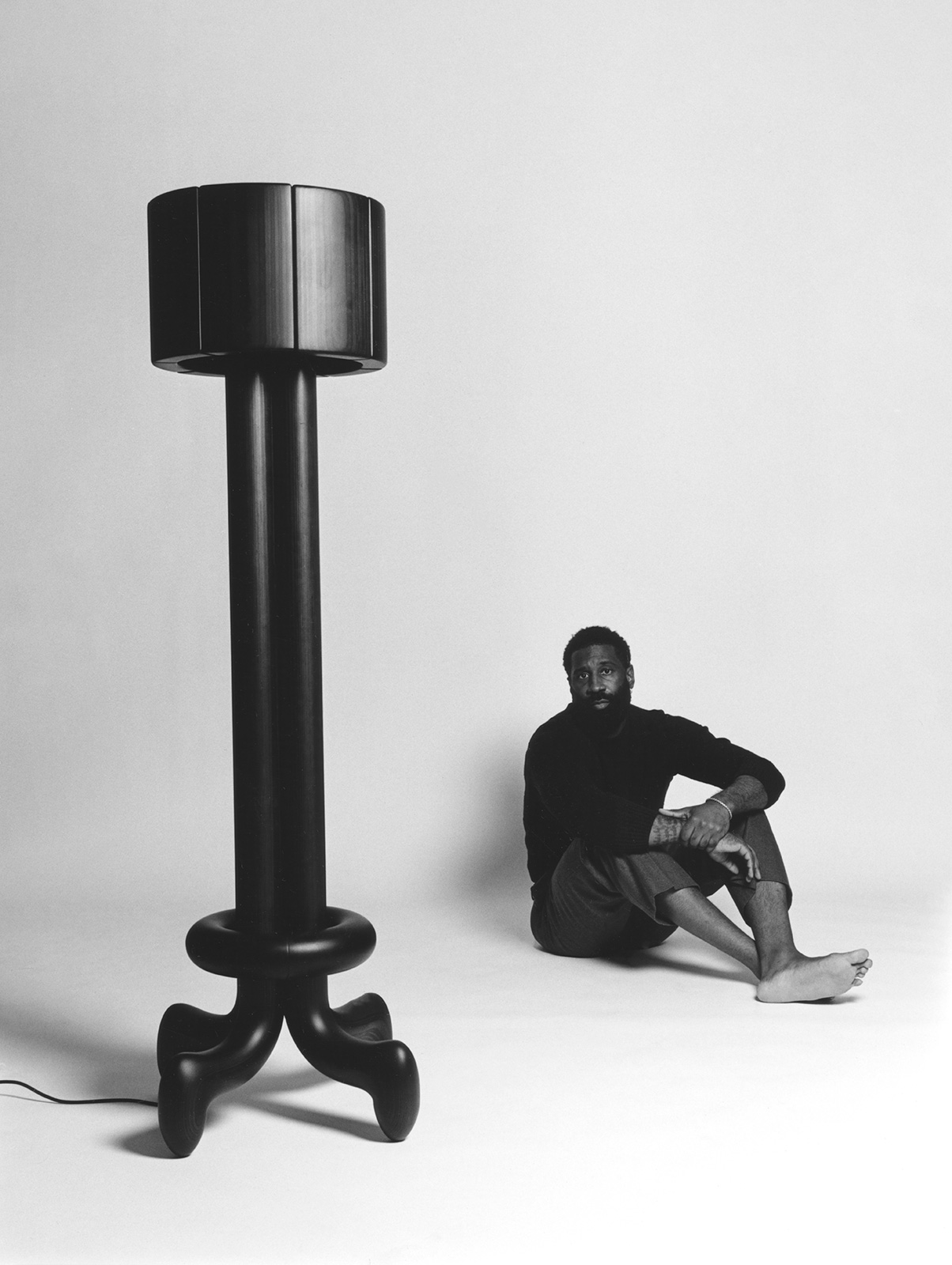
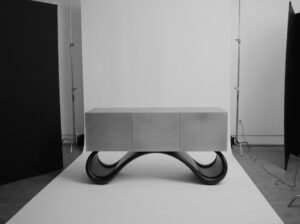
There’s a curvature to Justin Wesley’s furniture that feels organically sensual. In his first collection, Renaissance, debuted in New York this past October, Justin builds a visual language grounded in rich, warm cocoa-stained birch juxtaposed in places with steely, matted aluminum to create intentionally straightforward forms. But ingenuity lies in the striking way that each of his pieces commands the use of curves and angles together to build an arresting, refined perspective.
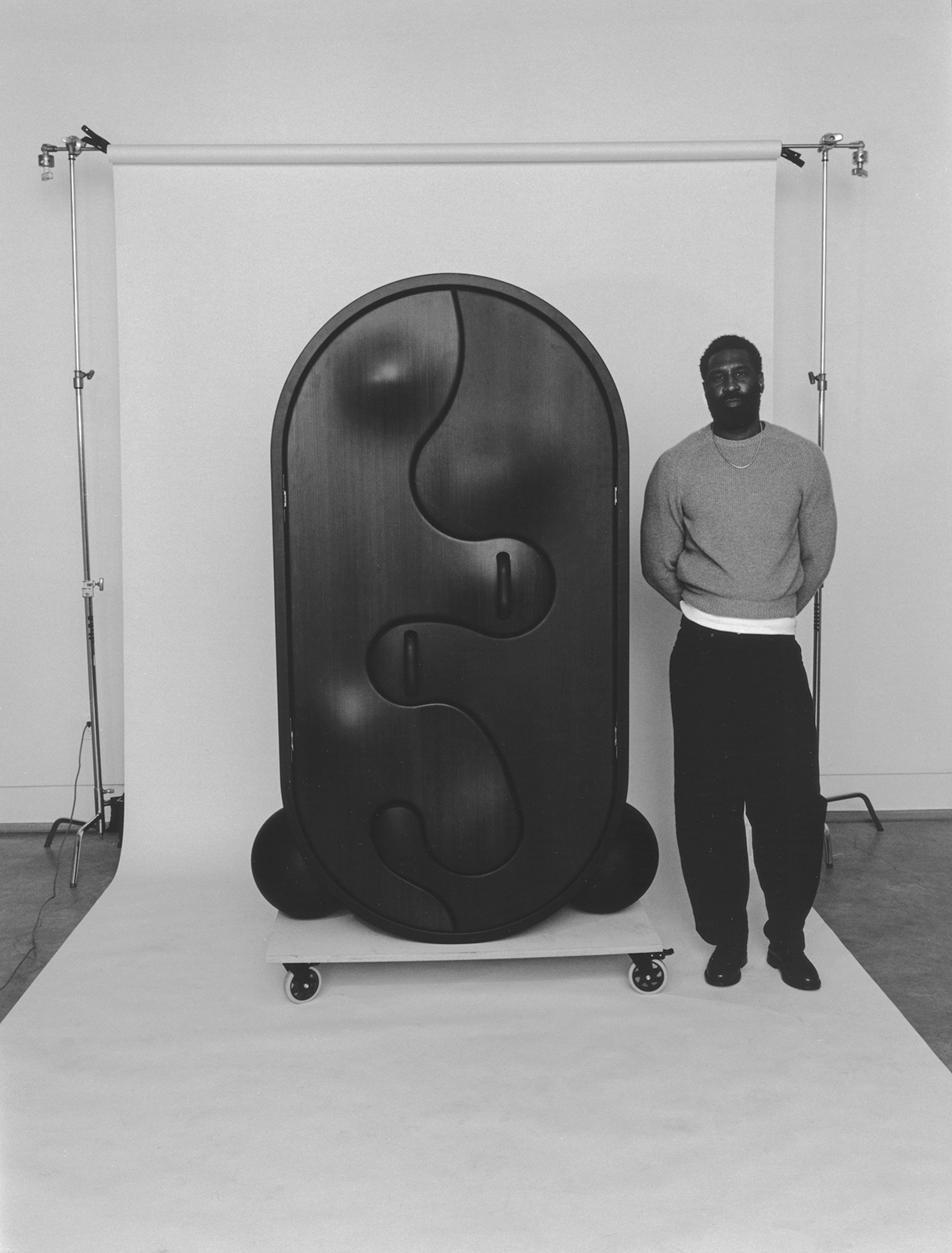
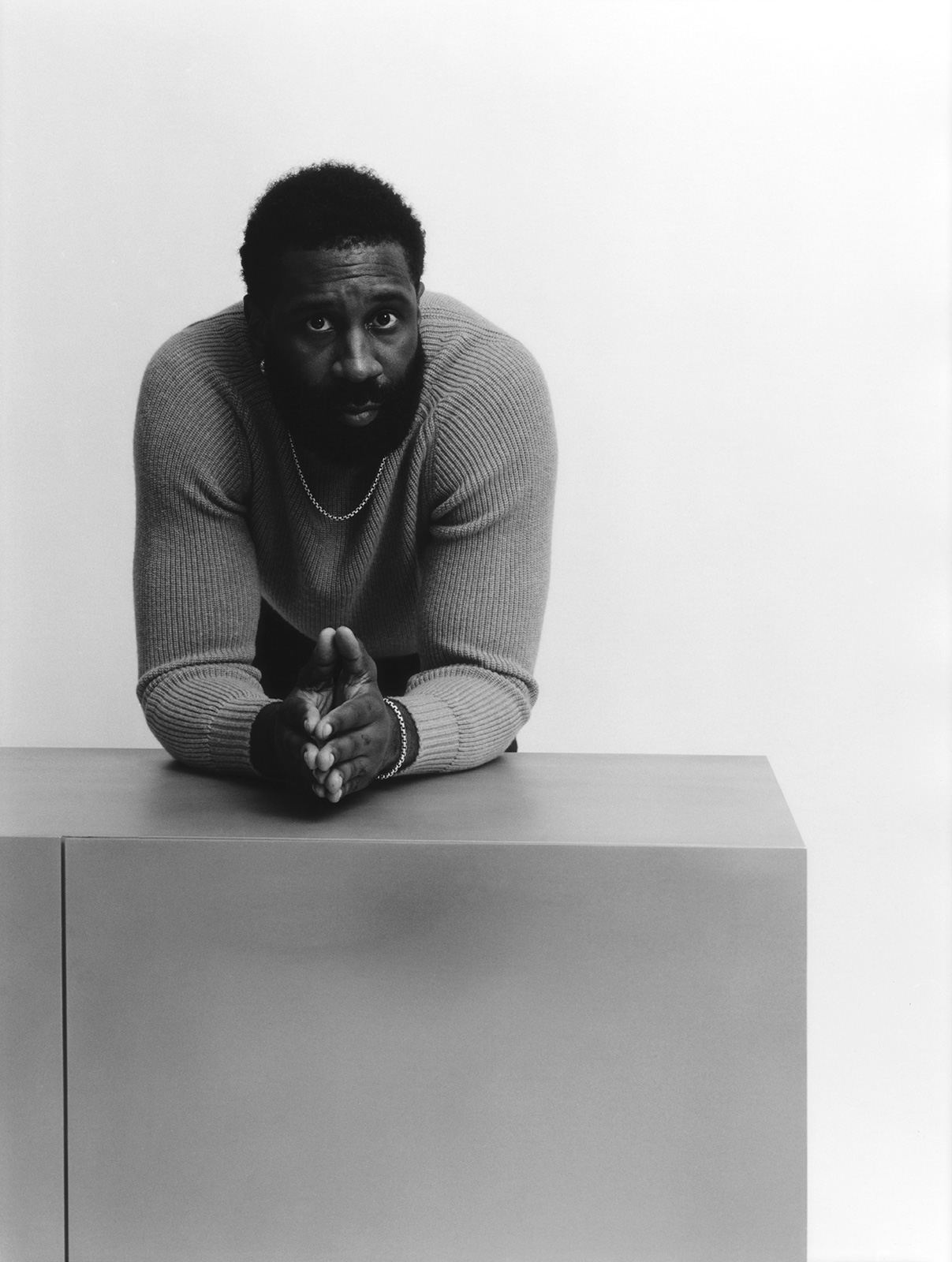
Justin Wesley wears all clothing by Stoffa.
Coming from a creator with no formal design training and whose first gallery representation was gained through sketches alone, it’s an impressive fluency. As we sat on a Zoom call ahead of Design Miami, Justin revealed that he considers his career in the medium a happenstance: “[It was] destiny or, as I like to say, by colossal accident,” he detailed, a warm smile lighting his face. A college basketball player, his life and future plans revolved around the sport. But an epiphany in his Junior year left the young visionary at a crossroads. Basketball wasn’t enough, and he needed to find a new path.
Fashion called to him first. “All I heard was, ‘you just have to sketch your ideas out and have them made? Oh that’s easy!”, he said, reflecting on his initial naivete upon entering the field. “Now, it’s not that easy. But I could always draw as a kid. I hadn’t drawn in a long time but as I started sketching, it all started to come back to me.” It was this innate skill paired with his ability to materialize a variety of creative inputs into one cohesive distillation that led to a serendipitous meeting in a design gallery in 2022. There, Justin was challenged by the owner to draw 100 unique pieces of furniture. 130 distinct ideas later, his first console, Knuckles, went on to show at Design Miami’s Los Angeles edition.
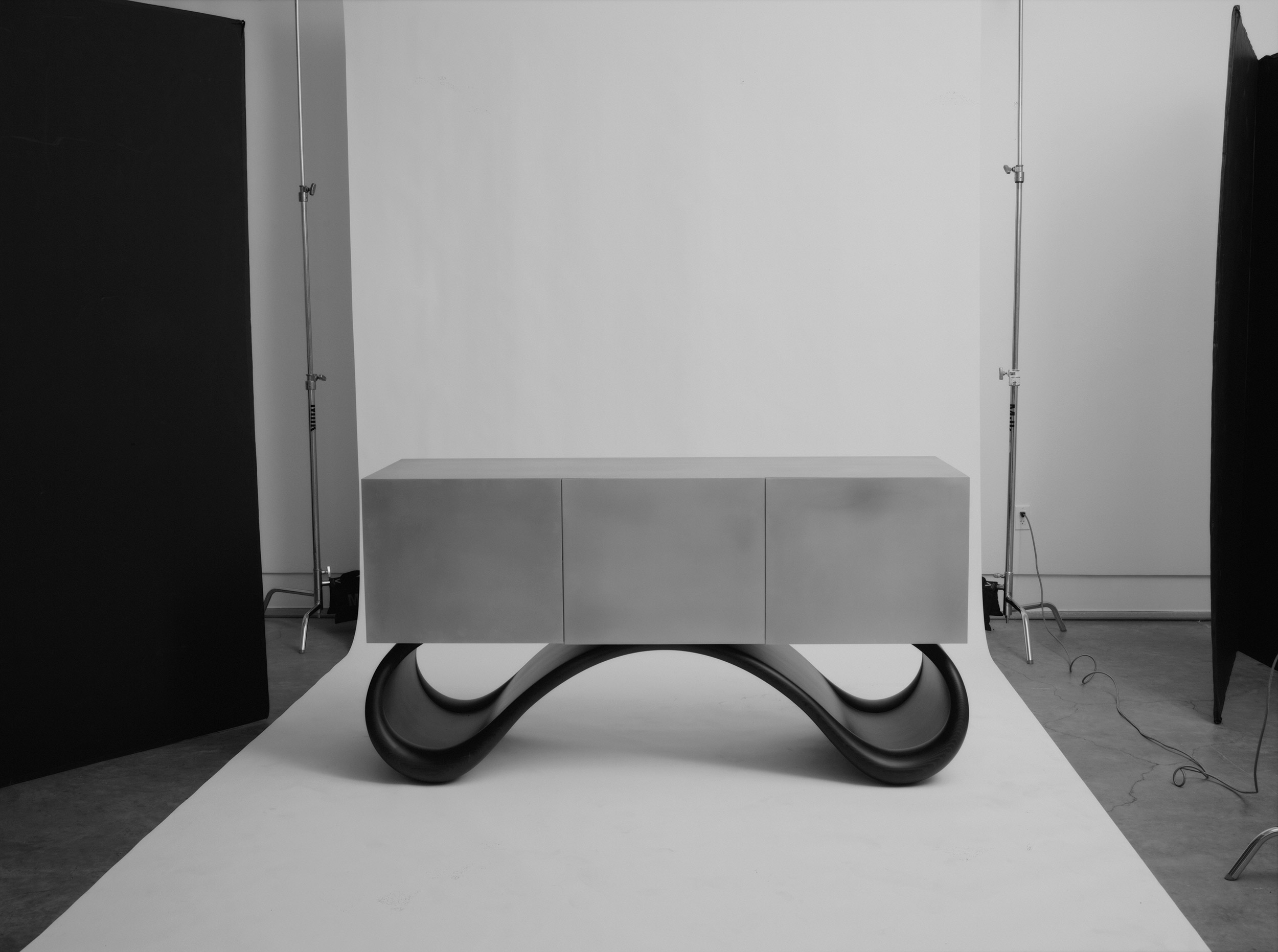
“There’s a tension that I want to have in my work: how am I pushing the envelope? How am I creating what hasn’t been made before?”
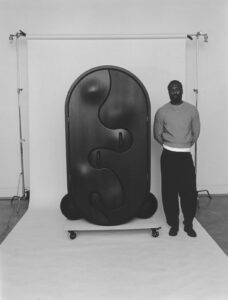
Renaissance, however, is a hard pivot away from his initial creations. Its four objects chart Justin’s assured voice, acting as manifested vessels of the passionate nature of the designer himself. “There’s a tension that I want to have in my work: how am I pushing the envelope? How am I creating what hasn’t been made before?” An example: the two enormous spherical feet that form the base of the voluminous, vertically oblong dresser were initially thought to be physically incapable of holding the large frame steady against the weight of the snaking-design doors. Solidifying the math with an architect, Justin countered his fabricators. “At a certain point I have to trust my vision and myself.”
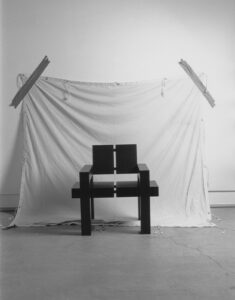
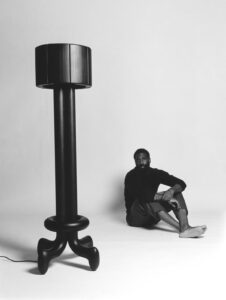
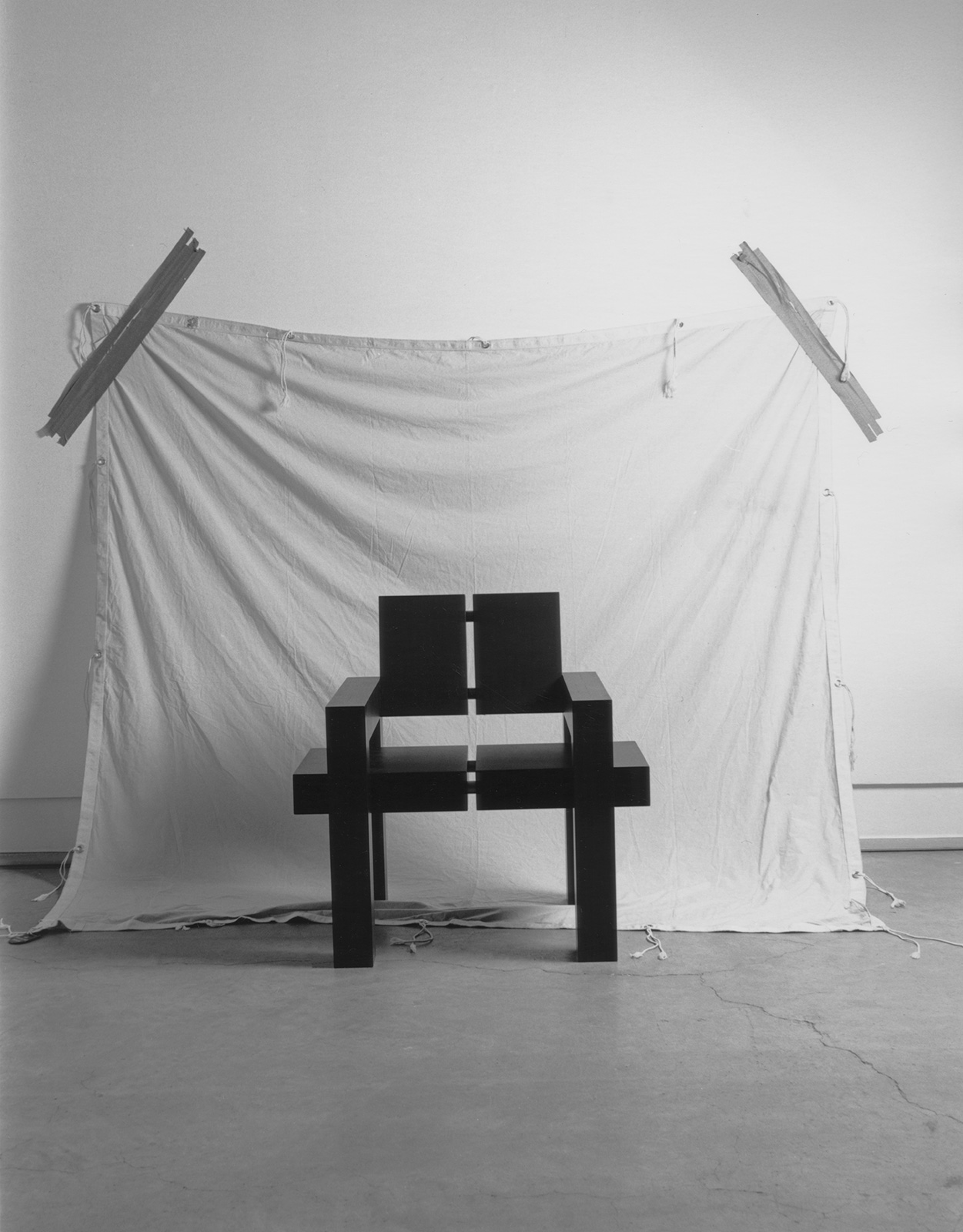
The evidence of his committed eye abounds: a lamp’s straight body, rounded through cylindrical, united forms, its legs bending like delicate floating tentacles; the rich birch base of his credenza revealing a striking curly woodgrain accenting the sloping arch of the leg; the rigidity of his chair, held together by delicately placed aluminum tubes contrasting the warm straight-grained wood, its slits an ode to light rays. The work is his commitment to not only taking himself past the deemed limits of possibility, but his audience’s expectations as well. “People looked at these pieces and said, ‘Justin, I’m sorry – I didn’t know.’ That’s how impacted I want you to be every time I come out. I want my designs to move you. Unless I’m hitting that, then I’m not doing what I’m supposed to be doing.”