
Artist and activist Liv Wynter explains why we need to redefine the term emotional labour.
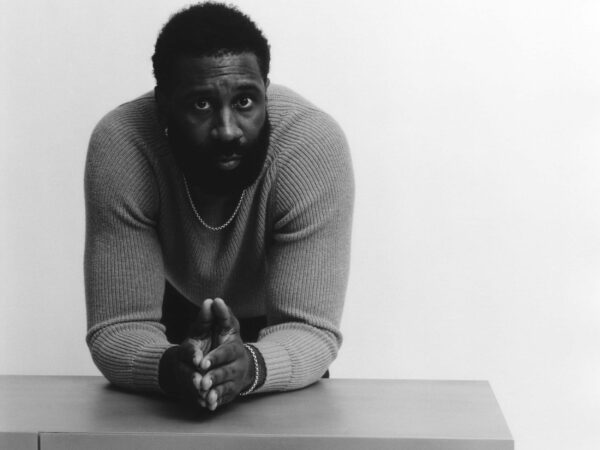
Artist and activist Liv Wynter is exasperated. In a world where movements like #MeToo and #TimesUp have the potential to spark radical change, Wynter can’t help but feel it might be in vein. “I’m frustrated at the commodification of radicalism,” she explains, condemning “the capitalist swallowing of ideas such as emotional labor and self-care and feminism and gender. I am exhausted from having people try to sell me things they have stolen from me.”
As a notable voice in the London political arts scene, Wynter has been on the frontline of direct action against issues such as domestic violence, gender inequality, and sexual abuse. As a member of Sisters Uncut, Wytner stormed the 2018 BAFTA red carpet in solidarity with #TimesUp to raise awareness about domestic violence. That same year she made headlines after quitting her position as the Tate Modern’s artist-in-residence. Wynter publicly announced her resignation on the eve of International Women’s Day, citing “invisible inequalities” within the institution, after Tate director Maria Balshaw appeared to dismiss allegations of sexual misconduct against one of Tate’s biggest donors, Anthony d’Offay.
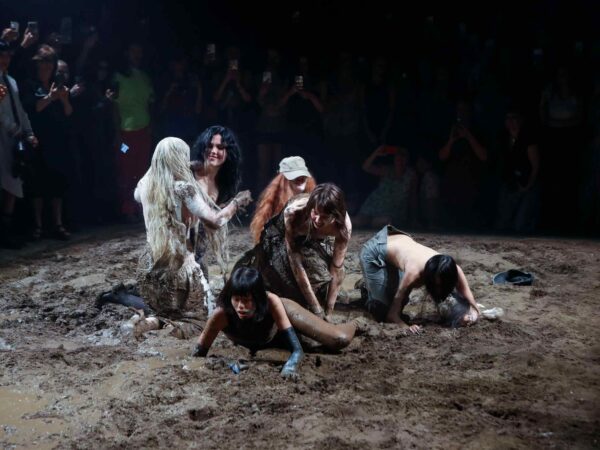
Wynter’s latest performance, And So the Choir Gathers, Before It Is Too Late, addresses all of her frustrations. Ahead of its debut at the Free Word Centre in London on April 4, she explains why her new work is partly fueled by misconceptions about emotional labour.
Above The Fold

Sam Contis Studies Male Seclusion

Slava Mogutin: “I Transgress, Therefore I Am”

The Present Past: Backstage New York Fashion Week Men’s Spring/Summer 2018

Pierre Bergé Has Died At 86

Falls the Shadow: Maria Grazia Chiuri Designs for Works & Process

An Olfactory Memory Inspires Jason Wu’s First Fragrance

Brave New Wonders: A Preview of the Inaugural Edition of “Close”

Georgia Hilmer’s Fashion Month, Part One

Modelogue: Georgia Hilmer’s Fashion Month, Part Two

Surf League by Thom Browne

Nick Hornby: Grand Narratives and Little Anecdotes

The New Helmut

Designer Turned Artist Jean-Charles de Castelbajac is the Pope of Pop

Splendid Reverie: Backstage Paris Haute Couture Fall/Winter 2017
Tom Burr Cultivates Space at Marcel Breuer’s Pirelli Tire Building

Ludovic de Saint Sernin Debuts Eponymous Collection in Paris

Peaceful Sedition: Backstage Paris Fashion Week Men’s Spring/Summer 2018
Ephemeral Relief: Backstage Milan Fashion Week Men’s Spring/Summer 2018

Olivier Saillard Challenges the Concept of a Museum

“Not Yours”: A New Film by Document and Diane Russo

Introducing: Kozaburo, 2017 LVMH Prize Finalist

Introducing: Marine Serre, 2017 LVMH Prize Finalist

Conscious Skin

Escapism Revived: Backstage London Fashion Week Men’s Spring/Summer 2018

Introducing: Cecilie Bahnsen, 2017 LVMH Prize Finalist

Introducing: Ambush, 2017 LVMH Prize Finalist

New Artifacts

Introducing: Nabil Nayal, 2017 LVMH Prize Finalist

Bringing the House Down

Introducing: Molly Goddard, 2017 LVMH Prize Finalist

Introducing: Atlein, 2017 LVMH Prize Finalist

Introducing: Jahnkoy, 2017 LVMH Prize Finalist

LVMH’s Final Eight

Escaping Reality: A Tour Through the 57th Venice Biennale with Patrik Ervell

Adorned and Subverted: Backstage MB Fashion Week Tbilisi Autumn/Winter 2017

The Geometry of Sound

Klaus Biesenbach Uncovers Papo Colo’s Artistic Legacy in Puerto Rico’s Rainforest

Westward Bound: Backstage Dior Resort 2018

Artist Francesco Vezzoli Uncovers the Radical Images of Lisetta Carmi with MoMA’s Roxana Marcoci

A Weekend in Berlin

Centered Rhyme by Elaine Lustig Cohen and Hermès

How to Proceed: “fashion after Fashion”

Robin Broadbent’s Inanimate Portraits

“Speak Easy”

Revelations of Truth

Re-Realizing the American Dream

Tomihiro Kono’s Hair Sculpting Process

The Art of Craft in the 21st Century

Strength and Rebellion: Backstage Seoul Fashion Week Autumn/Winter 2017

Decorative Growth
The Faces of London

Document Turns Five
Synthesized Chaos: “Scholomance” by Nico Vascellari

A Whole New World for Janette Beckman

New Ceremony: Backstage Paris Fashion Week Autumn/Winter 2017
New Perspectives on an American Classic

Realized Attraction: Backstage Milan Fashion Week Autumn/Winter 2017

Dematerialization: “Escape Attempts” at Shulamit Nazarian

“XOXO” by Jesse Mockrin

Brilliant Light: Backstage London Fashion Week Autumn/Winter 2017

The Form Challenged: Backstage New York Fashion Week Autumn/Winter 2017

Art for Tomorrow: Istanbul’74 Crafts Postcards for Project Lift

Inspiration & Progress

Paskal’s Theory of Design

On the Road

In Taiwan, American Designer Daniel DuGoff Finds Revelation

The Kit To Fixing Fashion
The Game Has Changed: Backstage New York Fashion Week Men’s Autumn/Winter 2017

Class is in Session: Andres Serrano at The School

Forma Originale: Burberry Previews February 2017

“Theoria”

Wearing Wanderlust: Waris Ahluwalia x The Kooples

Approaching Splendor: Backstage Paris Haute Couture Spring/Summer 2017

In Florence, History Returns Onstage

An Island Aesthetic: Loewe Travels to Ibiza

Wilfried Lantoine Takes His Collection to the Dancefloor

A Return To Form: Backstage New York Fashion Week Spring/Summer 2018

20 Years of Jeremy Scott

Offline in Cuba

Distortion of the Everyday at Faustine Steinmetz

Archetypes Redefined: Backstage London Fashion Week Spring/Summer 2018

Spring/Summer 2018 Through the Lens of Designer Erdem Moralıoğlu

A Week of Icons: Backstage Milan Fashion Week Spring/Summer 2018

Toasting the New Edition of Document

Embodying Rick Owens

Prada Channels the Wonder Women Illustrators of the 1940s
Andre Walker’s Collection 30 Years in the Making

Fallen From Grace, An Exclusive Look at Item Idem’s “NUII”

Breaking the System: Backstage Paris Fashion Week Men’s Autumn/Winter 2017

A Modern Manufactory at Mykita Studio

A Wanted Gleam: Backstage Milan Fashion Week Men’s Autumn/Winter 2017

Fashion’s Next, Cottweiler and Gabriela Hearst Take International Woolmark Prize

Beauty in Disorder: Backstage London Fashion Week Men’s Autumn/Winter 2017

“Dior by Mats Gustafson”

Prada’s Power

George Michael’s Epochal Supermodel Lip Sync

The Search for the Spirit of Miss General Idea

A Trace of the Real

Wear and Sniff

Underwater, Doug Aitken Returns to the Real
Caroline Christie—What is And So the Choir Gathers, Before It Is Too Late about?
Liv Wynter—I am trying to add to a widespread conversation about what feminism may or may not look like. [The performance] uses music from The Specials, a band who were heavily politically engaged at their prime, but whose lyrics seem super important and present to me at the moment. It’s about exhaustion and fatigue and anger and rage and survival. I hope you like it.
Caroline—What is emotional labour?
Liv—Emotional labour means lots of things to lots of different people at this moment in time. The term was originally coined by [American sociologist] Arlie Hochschild to specifically describe the act of performing emotion in a job—she gives the example of an air hostess having to appear happy and untroubled whilst giving troubling news. My research is more focused on two roles—the role of the barmaid, and the role of a working-class café owner. Both are female dominated roles, with the expectation of emotional labour as Arlie defines it.
Now, emotional labour has somehow leaked its way out of the specifics of the workplace and become a way to analyze everyday relationships and behaviors. In my workshop at Free Word, people were given different examples of situations and asked to discuss if they were emotional labour or not. Examples would be cooking for a partner who has been working late, listening to a friend complain at length about their partner, looking after a sick loved one, and being expected to explain a micro-aggression in the workplace. Most of them opened up conversation and it was clear that everyone had a different contextual understanding of emotional labour. I guess that’s where my interest stems from.
Caroline—How can women stop carrying the mental load?
Liv—In the original [workplace] sense of the term ‘emotional labor’, it means finding ways to not allow that performative pleasantry and hospitality work its way into your everyday life. Have a clear way to separate the fake smiley face at work and the fake smiley face in the home. This seems incredibly important at a time where so many of us have many jobs and are working disgustingly inhumane hours.
[In terms of] how the term is used now it’s about personal boundaries and how you set and maintain them. I am actually very rubbish at this. I give very excellent advice and then allow myself to get emotionally rinsed and drained. I have very bad anxiety around confrontation and not pleasing people. So, maybe, someone else will have the answers for this.
Caroline—How can we challenge the idea that the “mental load doesn’t exist” or that “there’s nothing we can do about it”?
Liv—It might be more helpful if we stepped back from what we call emotional labor, and consider how lightly we use that term. Just because something is irritating doesn’t mean its emotional labor. Just because something is gendered, I don’t necessarily think that makes it emotional labor. And also, under capitalism, people are turning acts of care into transactional ideas, which feels deeply unradical to me. There a lot of acts that are incredibly one sided, gendered, and unfair. And we must address those. But there’s also a lack of love and tenderness, and that needs to return too.
Wynter will be performing “And So the Choir Gathers, Before It Is Too Late” at Free Word in London on April 4, 2019.