
In 'Making It: 1992–2004', Bootsy Holler revives the feverish nights and fluorescent mornings of a Seattle that refused to die after grunge
When Kurt Cobain’s slurred screaming—as gruff as it goes—became the angsty voice of a generation when “Nevermind” fired up radio stations in 1991, young people in the singer’s hometown of Seattle had already moved on. They had been raging to Nirvana’s early grunge through the late ’80s. Seattle had suddenly found itself planted on the music map and, over the next few years, would become the crucible of American alternative music—with a serious teenage problem.
In the early ’90s, the Emerald City’s next generation of performers weren’t spending their Friday nights rocking out at Cobain concerts. They were being hounded away from clubs due to stringent teen liquor laws. It was amidst this conservatism that a barely legal 21-year-old Bootsy Holler moved to Seattle in 1992 and started photographing the wasteland of post-grunge Seattle ruled by bands like Death Cab for Cutie and Maktub—which America didn’t know about just yet. After three decades, these unseen photographs are being published for the first time in Bootsy’s photobook Making It: 1992—2004.
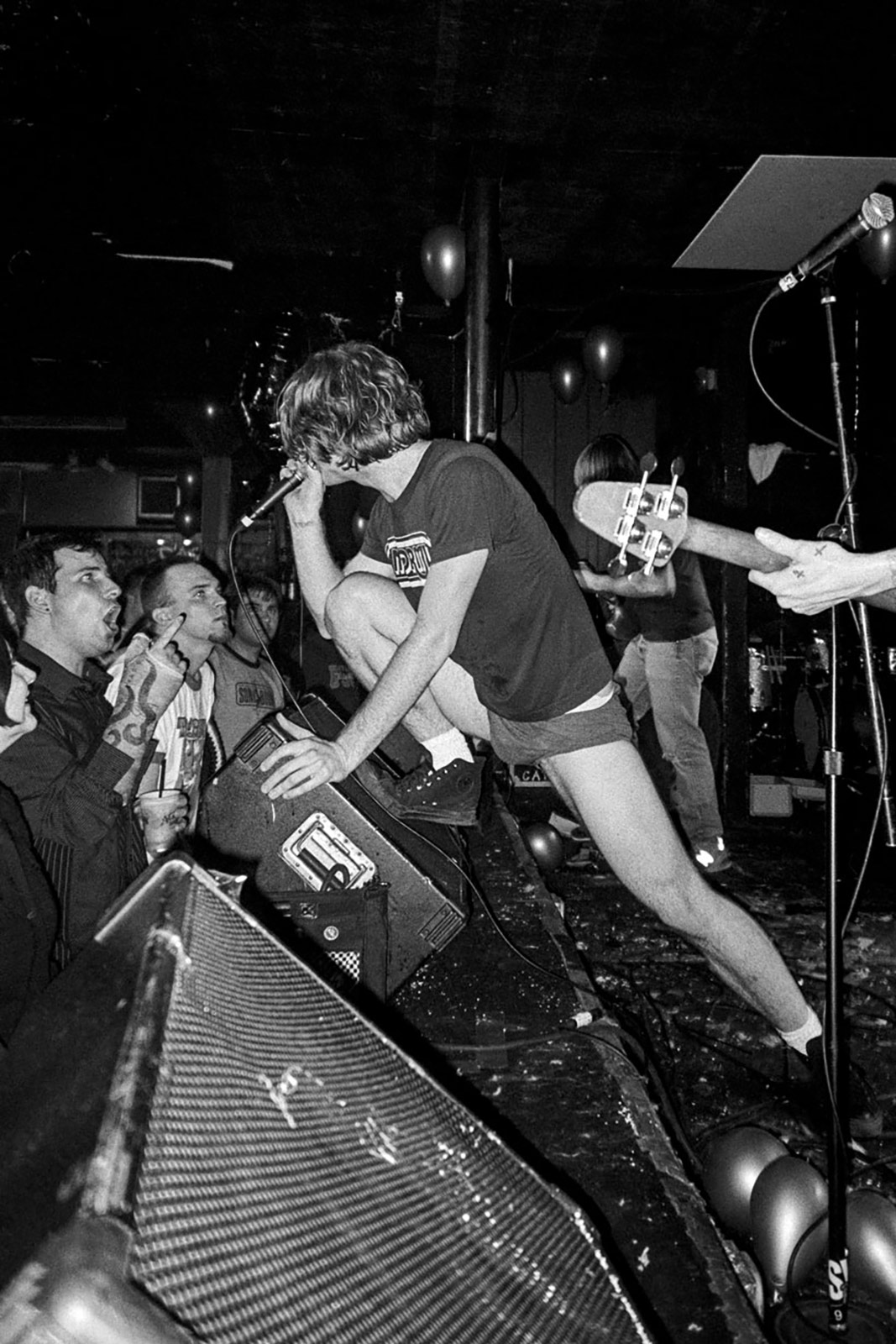
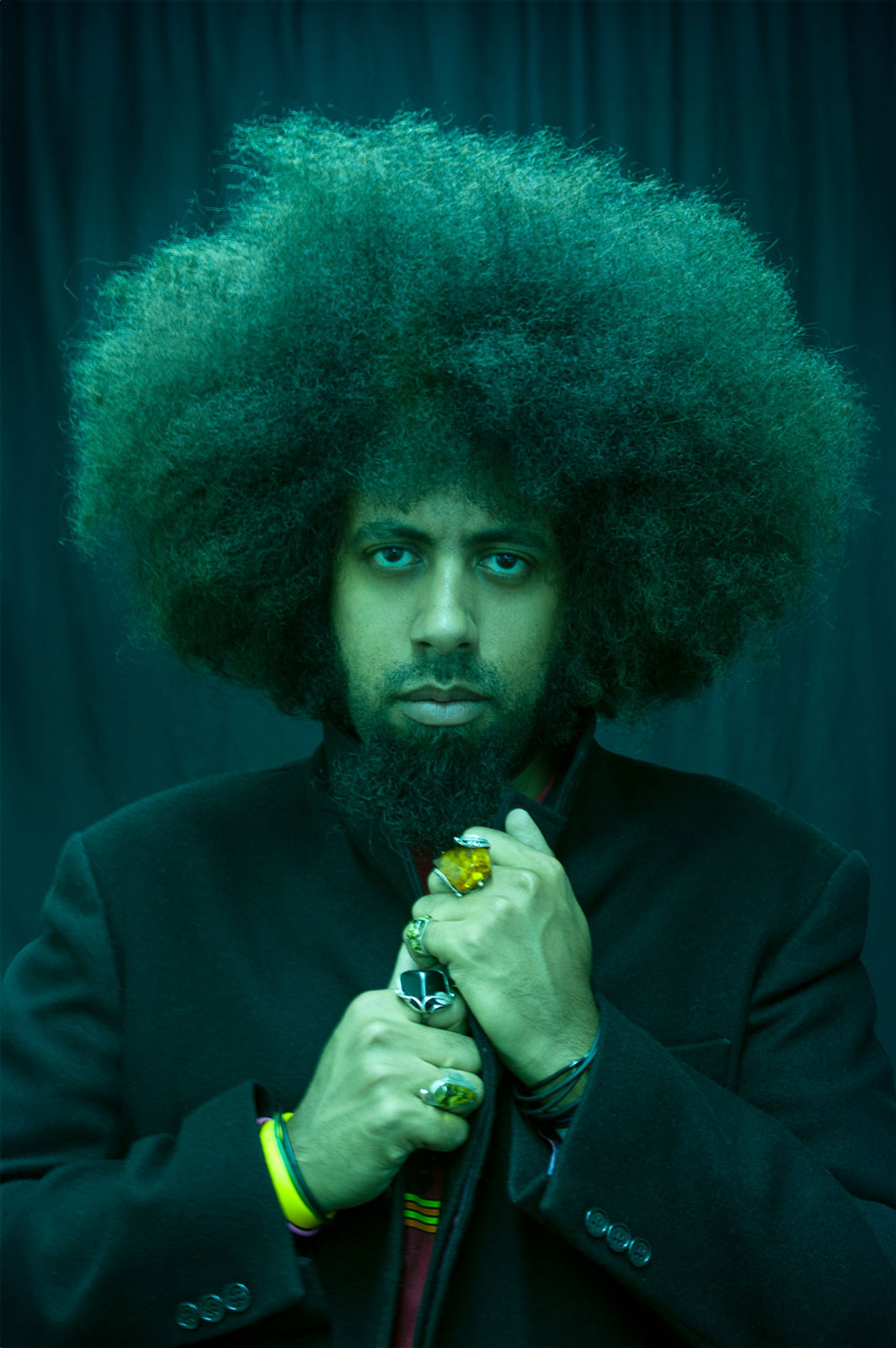
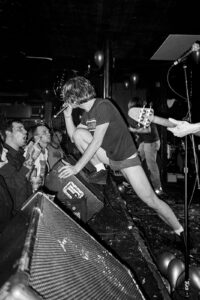
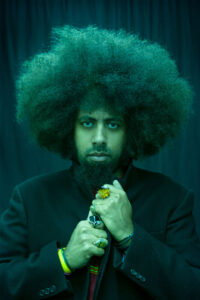
Left: Brian Standeford (The Catheters). Right: Reggie Watts (Maktub).
Bootsy was in Paris for Paris Photo, and it was mid-morning the weekend before the photography fair when she dialed in wearing a black Pink Floyd t-shirt—which we’ve all worn at some point. She and her sister once hid an AC/DC tape with explicit lyrics in a white cassette box, she recalled, so that their mother wouldn’t catch on. “We blew out my parents’ speakers playing air guitar to that,” she said. “The point is, you shove something like the Teen Dance Ordinance on kids, and they’re just going to find another place to party.” So, that meant the underage crowd was leaving Seattle to make music. “Including Ben Gibbard, who’d start Death Cab for Cutie,” said Bootsy. “They all said fuck you to the city and grunge—they were going to do their own thing.”
In one of Bootsy’s photos, Brian Standeford, the lead vocalist of The Catheters, leans into the audience with one foot on a speaker, as if he was serenading the mesmerized guy with a bandaged hand in the front row. “He’s in his underwear,” laughed Bootsy. “It doesn’t get any more dope than that in a concert where they’re not just up there singing, but putting on a fucking show. I saw them perform multiple times, and I don’t know why they didn’t blow up.” It was the same with Maktub in the early 2000s, who were spinning together hip-hop and jazz with the gentler R&B rhythms to make rock sound so funk. “Maybe it was the fear of bringing something so new that never got Maktub signed,” she said. “Reggie [Watts] is such a singular performer with his own style–he’d be doing his beatboxing on stage, which his band never liked. He had his one-man show in New York, and then he blew up.”
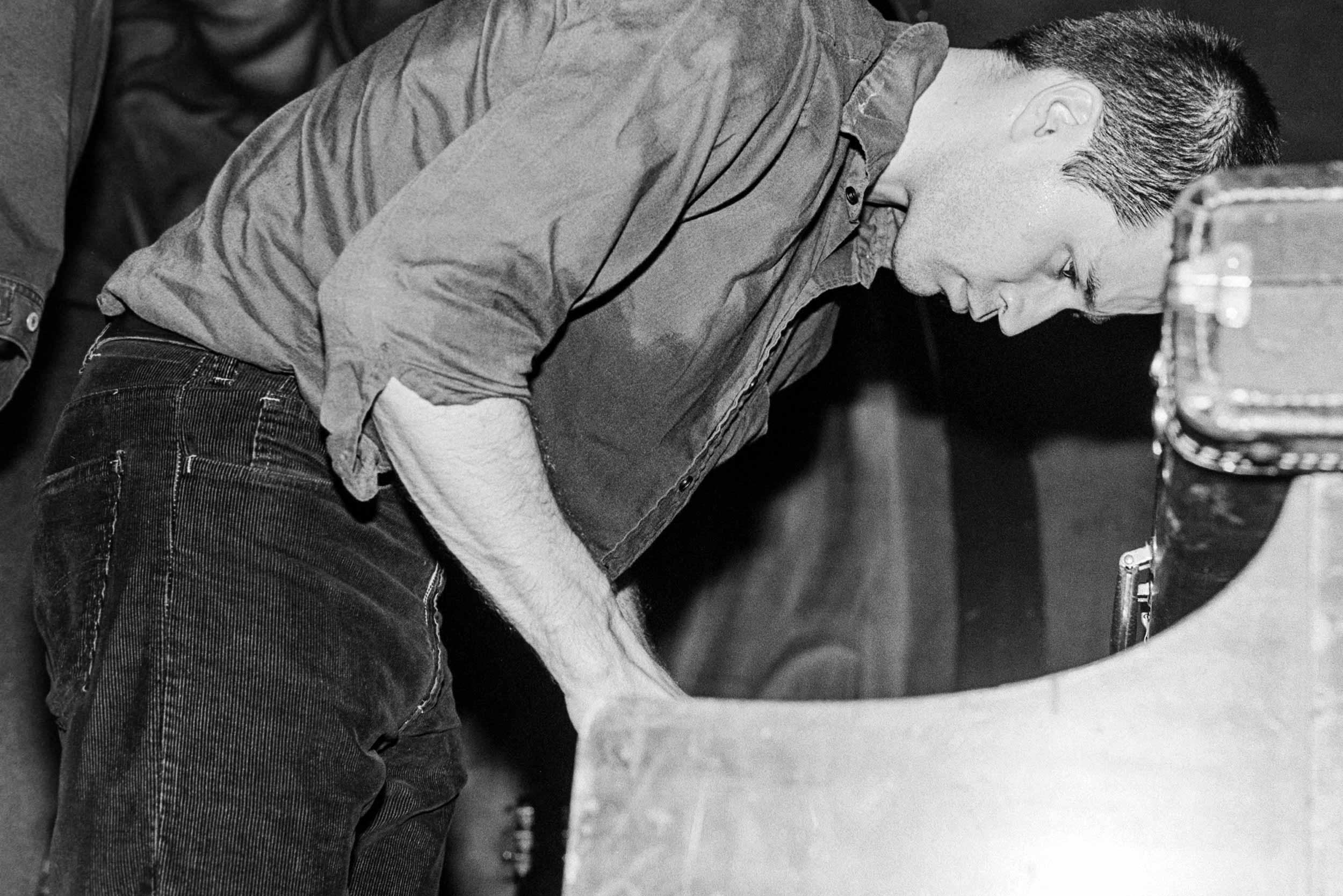
Paul Maroon (The Walkmen).
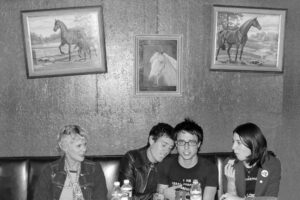
That photograph of Standeford was taken at Graceland, a music venue where Bootsy snapped the shot as she ate breakfast with the rock band Loudermilk. “That’s not ‘breakfast’,” she remarked when I asked her. “Because of the laws, bars in Washington state had to serve food with liquor. Half an hour before they shut at two in the morning, they’d bring out this huge breakfast with eggs, potatoes and toast—which cost about twenty-five or fifty cents. Sometimes that was the only food people ate. Graceland had dining tables outside and then there was the room where the band played. I was probably shooting Loudermilk in the club before, and they were at “breakfast” after they went on stage.”
Bootsy would only get to shoot a band ten minutes before or after they performed. That was when she pulled Emily Haines, lead singer of Metric, into the kitchen of Crocodile Café—owned by the sister of Bootsy’s friend—for a ROCKGRL magazine shoot. “Carla DeSantis, who started the magazine, was a musician herself,” Bootsy shared. “She started the magazine to favor women in music and told me Metric was in town. I’m at the café and there’s no place to go. I can’t shoot her in the café as there’s people all over. So, I took her to the kitchen which has fluorescent lighting.” Everyone knows fluorescent lighting isn’t lighting. “I ask her to get up on the stainless-steel table, and she grabs the knife,” said Bootsy. There’s a certain emotion bleeding through the blurry image, so reminiscent of The Bride from Kill Bill or Wendy Torrance in The Shining—basically, women who’ve had enough.
“They all said fuck you to the city and grunge—they were going to do their own
thing.”
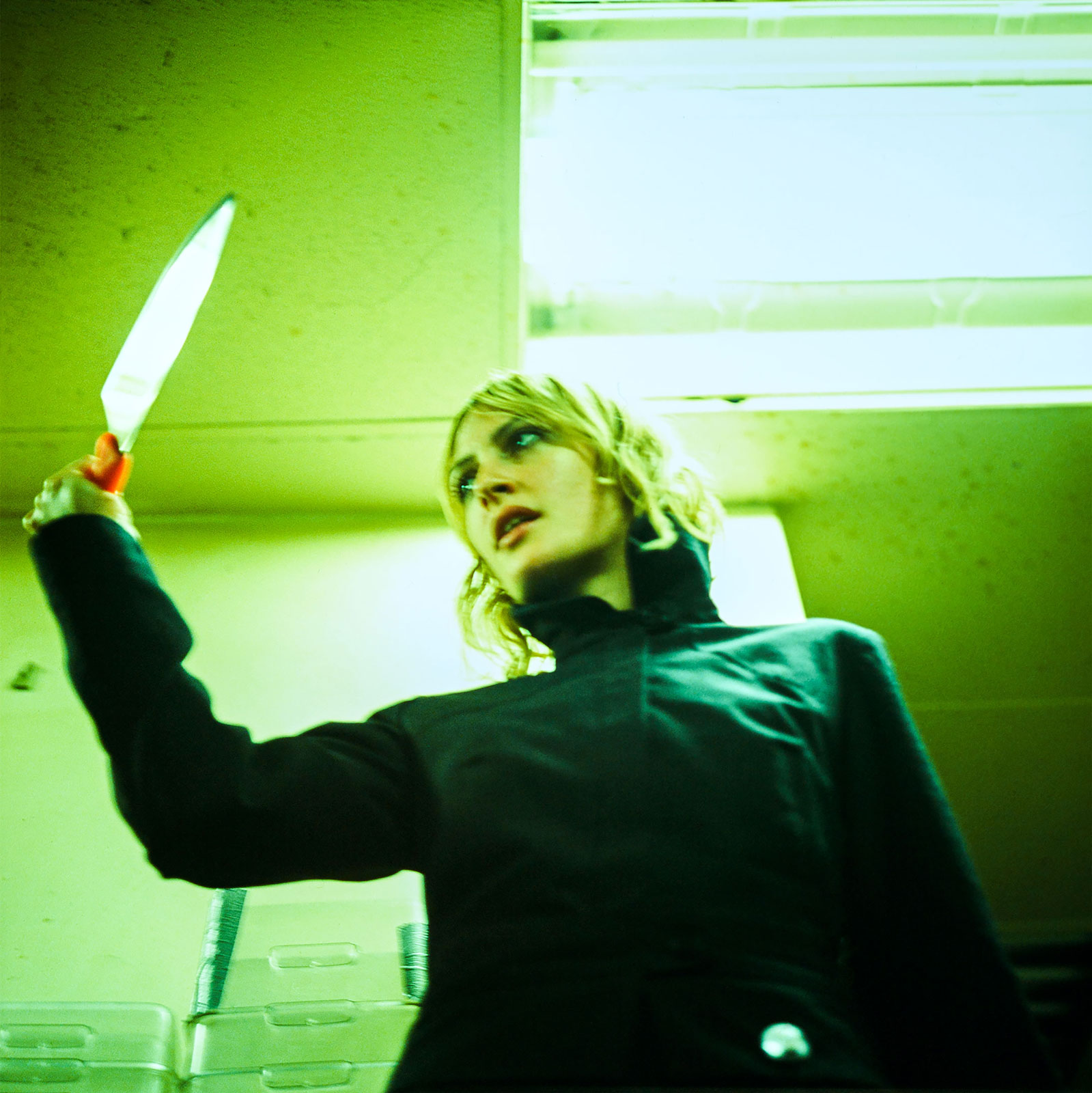
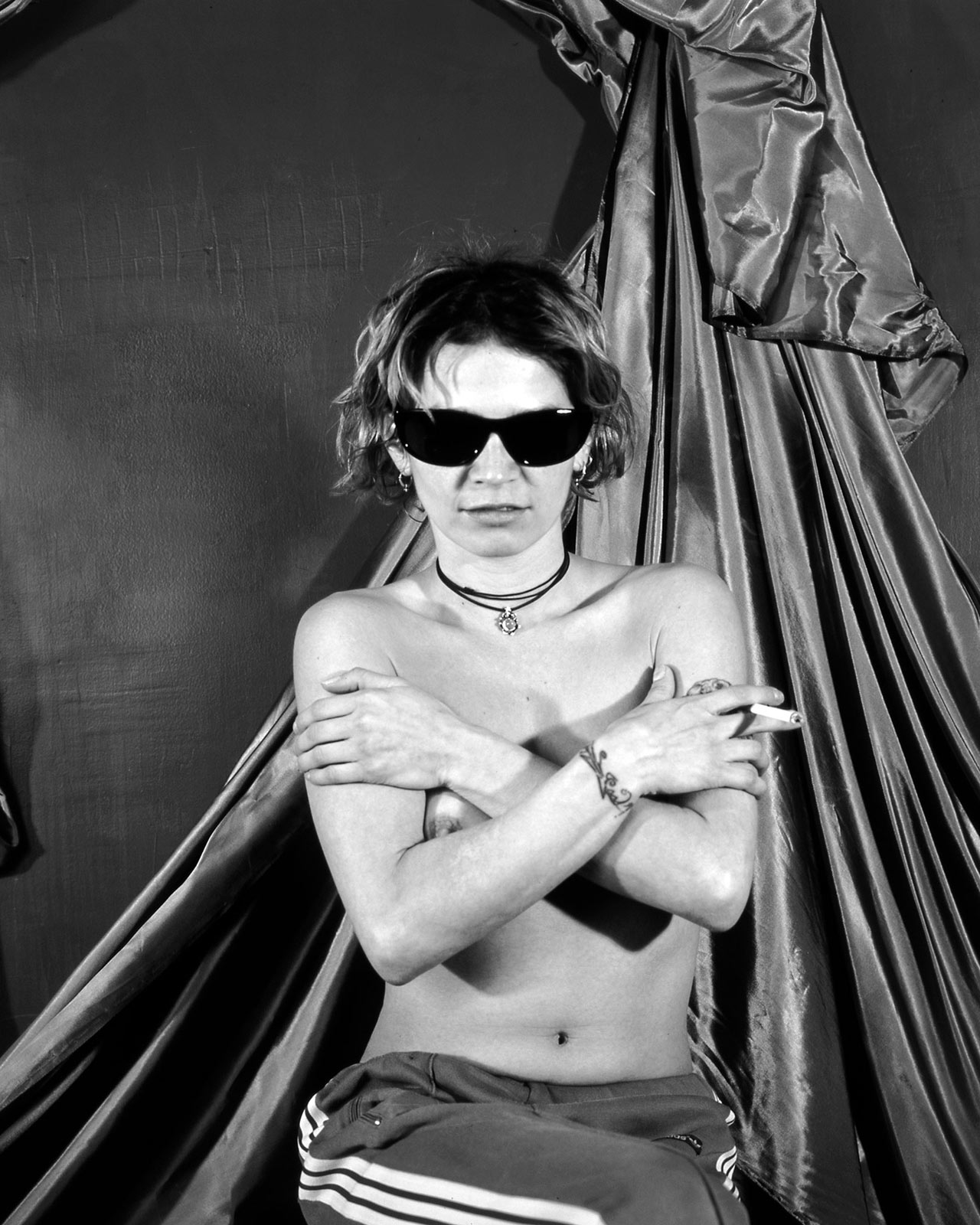
Left: Emily Haines (Metric). Right: Selene Vigil (7 Year Bitch).
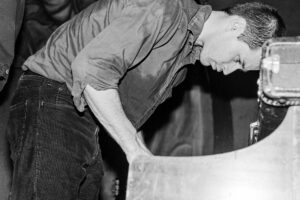
A similar sensuality oozes through in a close-up of Paul Maroon, guitarist and keyboardist of the New York indie band The Walkmen, who were playing at Seattle’s Neumos in 2004. Bootsy would ferret her way right in front of the stage. That’s where she captured the simple sexuality of a sweat-drenched shirt undone from Paul’s skinny jeans as he bent over his keys, frowning in concentration. It’s the stuff that groupie dreams are made of. “When I saw Nan Goldin for the first time in my early twenties, I realized a good photo makes you feel,” Bootsy explained, “And it’s capturing that intensity that I work with—and that’s why I often asked performers to stare down my lens.”
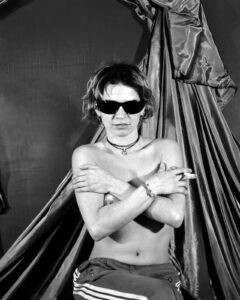
While Maroon wasn’t staring, Selene Vigil certainly was—even through sunglasses—her arms crossed over her naked chest, a lazy cigarette in one hand. “Selene of 7 Year Bitch was the first person I ever asked to take a photo,” Bootsy smiled. “She was a rock goddess, and I had seen her play. She was in a bar to see a band, having a drink. I had the balls to walk up to her and say, ‘I’d love to do a portrait of you’. She gave me her fucking number, and I made a date with her on the third floor of the club building. It was three years after Mia Zapata from The Gits was murdered, and I guess Selene felt comfortable with me shooting the image, as I’m a woman. I can also make people feel comfortable in five minutes, which allowed me to create a more intimate body of work.”
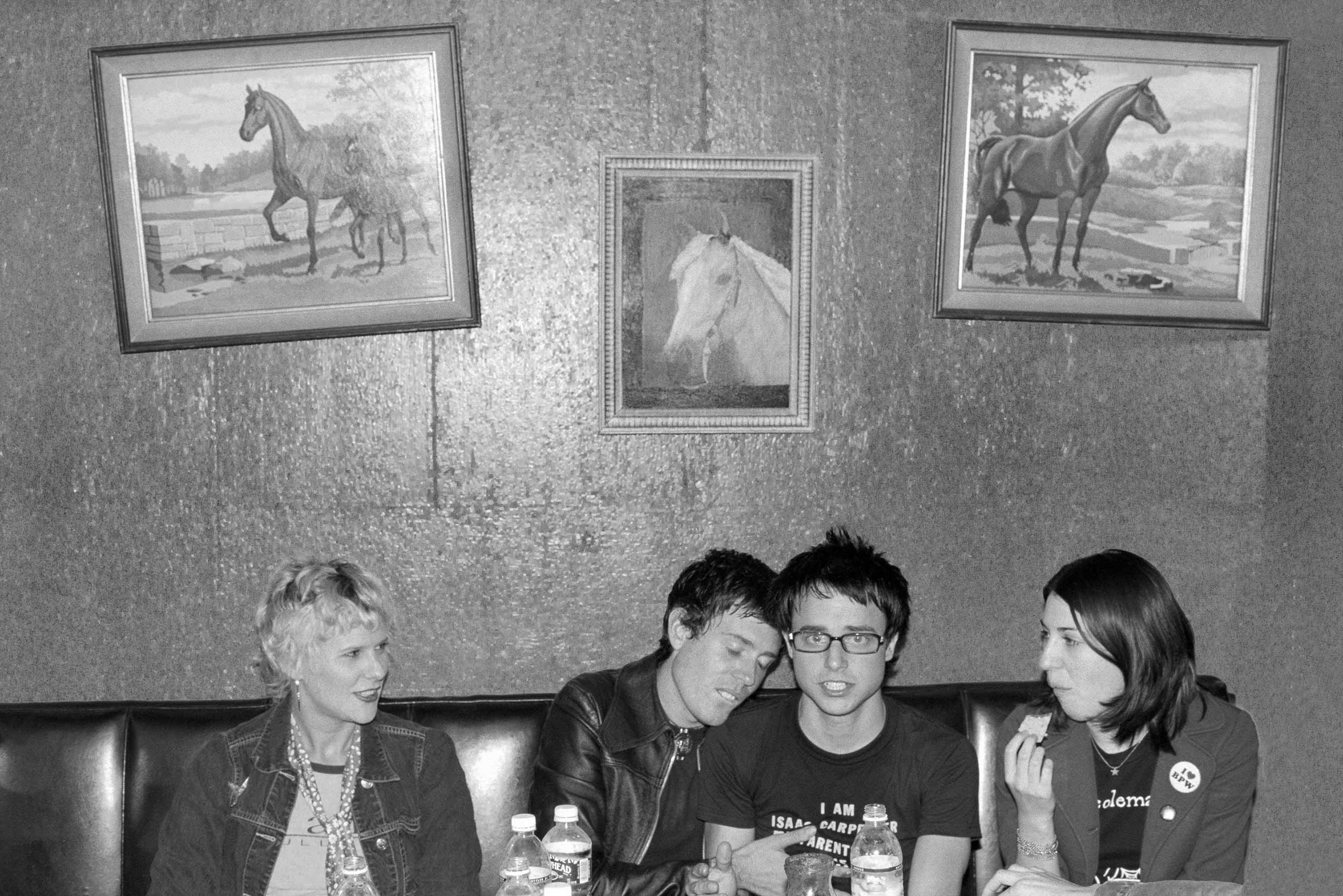
Loudermilk.
There’s that and a portrait of the defunct psychedelic pop rock Dodi’s eponymous frontman, nude and bathed in the yellow fluorescence due to the filter Bootsy popped over her lens as his nose bled all over her studio. And then there’s Ryann Donnelly, who fronted punk horror band Schoolyard Heroes, standing in her kitchen in a messy updo with writing hauntingly bleeding down the walls behind her. “She’s a classically trained musician who’s singing punk rock,” Bootsy stressed. “It’s mind-blowing. I went to her apartment and had all these clothes to pick from—and I’m a total fashion whore—and she asked me if the band came over later, would I do a band photo?” Slowly, Bootsy was getting on rock bands’ radar as the photographer for album covers. She believed in them, unlike a manager she’d met who refused to take on Death Cab for Cutie after seeing them perform live. “‘Where is this gonna go?’ he had said,” she recalled. “Didn’t see them coming at all.”
Neither did Bootsy predict that Macklemore and Travis Barker would be where they are now. She didn’t even know she shot Macklemore in 2006 until she dug through her archive. “Macklemore had no shoes on, and he was in his footsies,” she laughed as we looked at a purple-tinted photograph of the singer. “It’s a miracle what he did. Travis has his shirt inside out in my photograph—it might have been Blink-182’s first festival tour playing in front of thousands of people. It’s a big deal when you’re a baby band.”
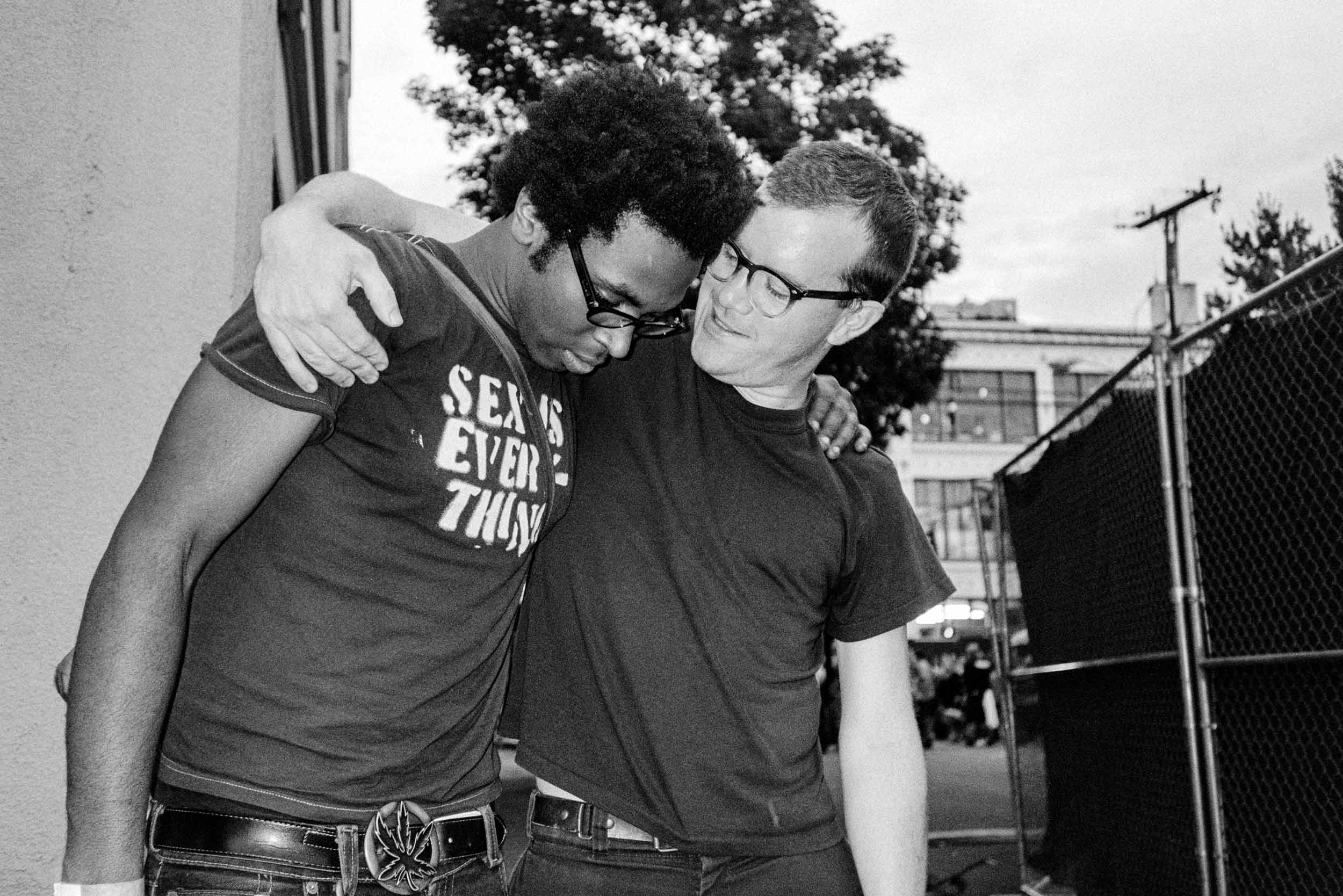
J. Clark (Pretty Girls Make Graves), Spencer Moody (The Murder City Devils) at The Capitol Hill Block Party.
Bootsy’s photographs record the parallel journeys of rising stars—of her models as musicians and herself as an artist. Strangely, she doesn’t consider herself as an artist who has “made it”, rather as someone who scrambled their way into a boy’s club. “It’s always bros before hoes,” she chuckled, “I got a job shooting backstage because my girlfriend got a job at a radio station and pushed me forward. It was hard for me to get hired. Even cameras were built for men!”
This reality defined Bootsy’s affection towards portraiture, and now, after three decades, she’s thinking about the legacy she’s leaving behind. That legacy is a softer intimacy often felt in her photos, like Kitty and Butterfly of Blonde on Blonde standing outside a recording studio, their hair windswept, in platform flip-flops and striped stockings. Bootsy’s dog Pony licks their hands. It’s a rare image of rock domesticity. Or the hint of a sly smile on the Deftones, sprawled around Pony. Or a split-second snap of J. Clark of post-hardcore band Pretty Girls Make Graves hugging Spencer Moody of The Murder City Devils at alt-heaven, The Capitol Hill Block Party. Bootsy’s legacy is one of a renegade who shouldn’t have been there, but was there anyway.
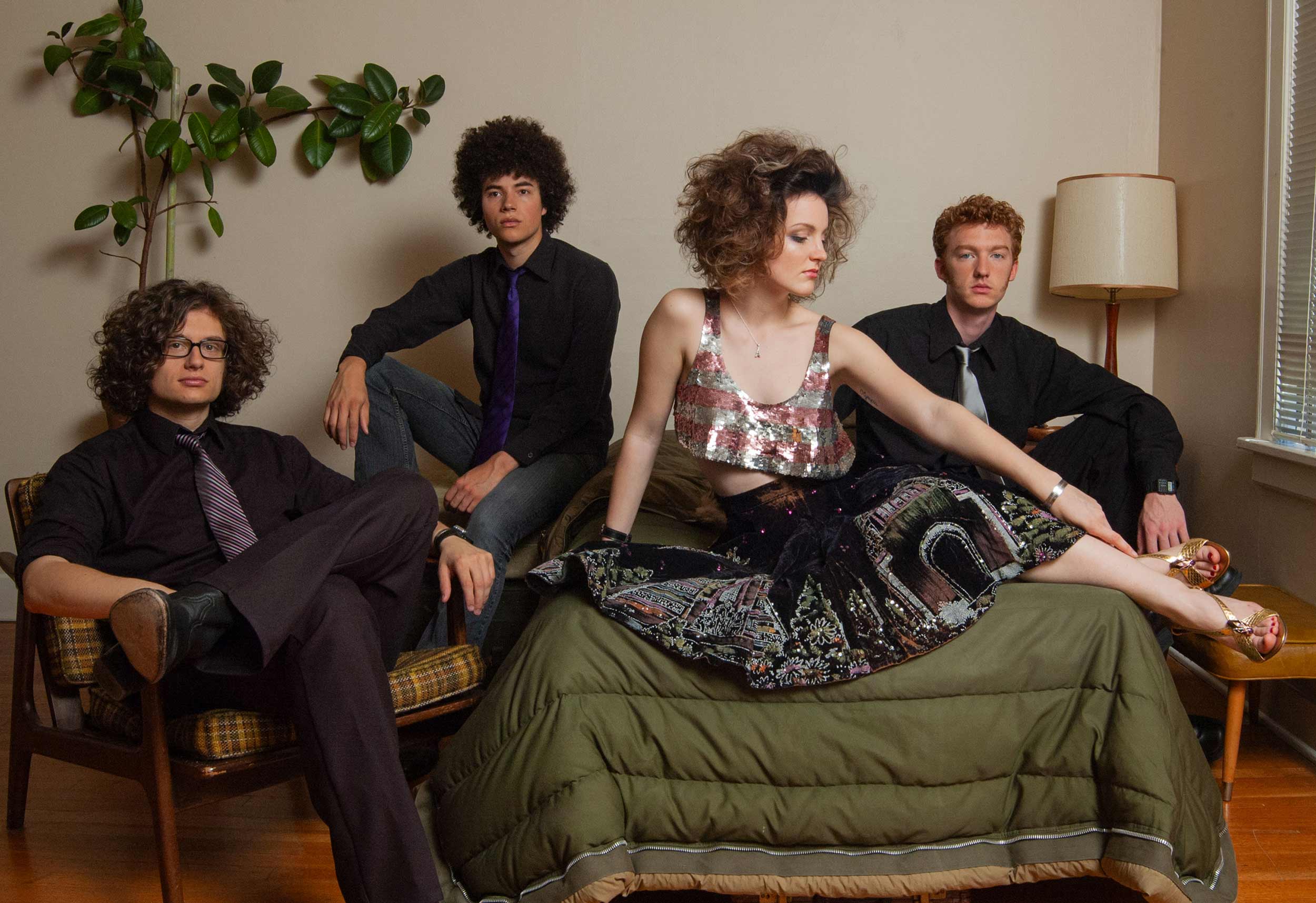
Schoolyard heroes.