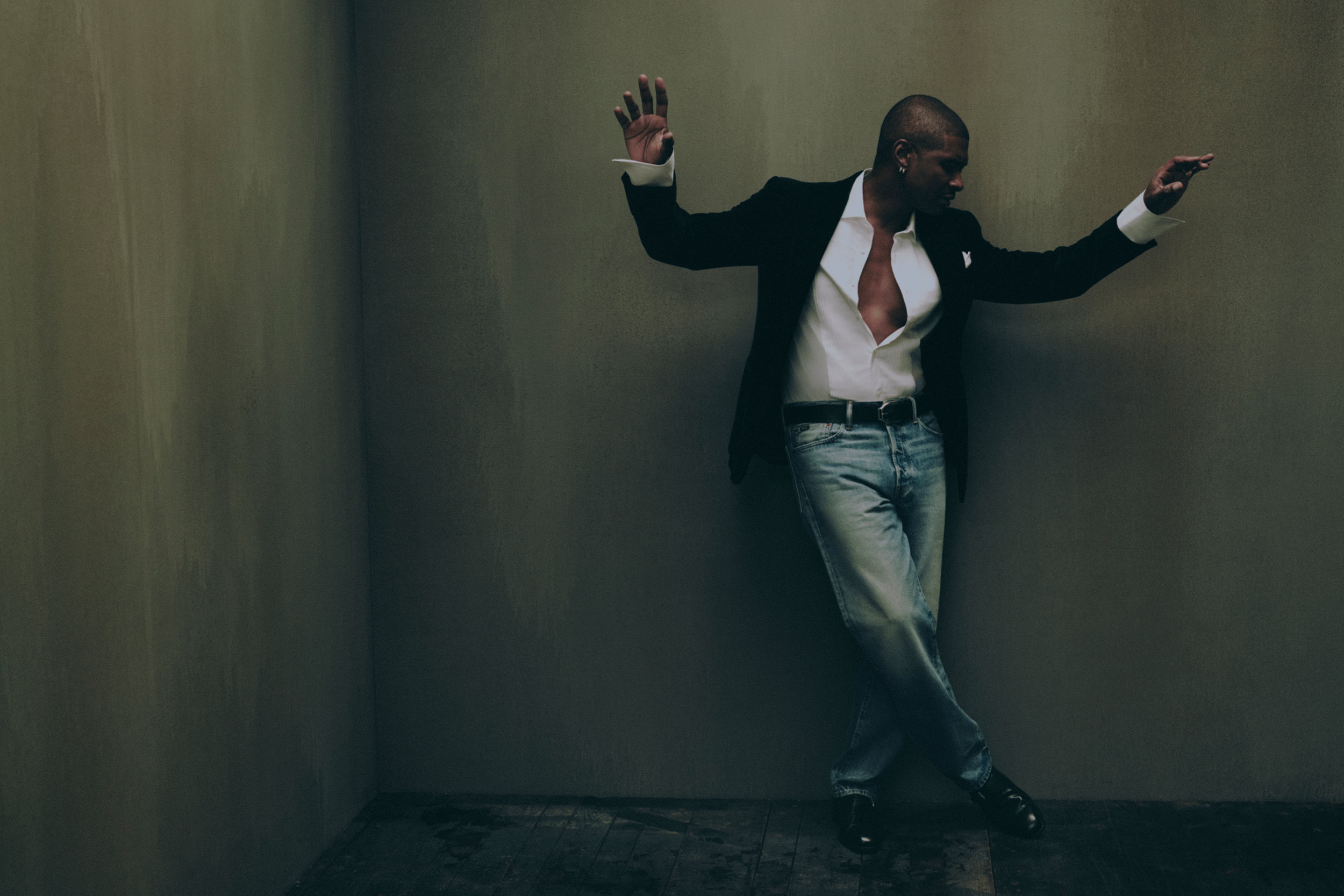
The musician sits down with writer Rob Franklin to talk finding expression in vulnerability, moving between Atlanta and New York City, and how he translated New York’s boldness and self-invention into Ralph’s Club New York, his new fragrance with Ralph Lauren.
Representing a career that spans genre and sound, Usher’s ambition both challenges and provokes. Perhaps this is why the Atlanta-born singer continues to occupy popular culture, not only through his Grammy Award-winning recordings, but also across fashion and the fine arts, where he has emerged as a patron and collector. He identifies career as a collage. Evolution does not mean abandoning the past, but layering it, building new meaning atop experience, vulnerability, and history. For Usher, this work is inseparable from legacy. “I want to carry that legacy, to make certain that I advocate for Black artists, for our Black lives,” he says, returning to a recurring investigation of what it means to be a Black man today.
Like Usher, Rob Franklin is fascinated by ideas of Blackness and legacy. His debut novel, Great Black Hope, follows a character navigating both New York’s underground and Atlanta’s Black high society, grappling with expectation and belonging. These tensions are not unfamiliar to Usher. Born in Atlanta and fostered in New York, the singer was shaped by both cities, each steeped in its own lineage of Black cultural shapers.
In a conversation for Document Journal, the pair met to discuss legacy, masculinity, and the importance of creating space for the next generation of Black artists.
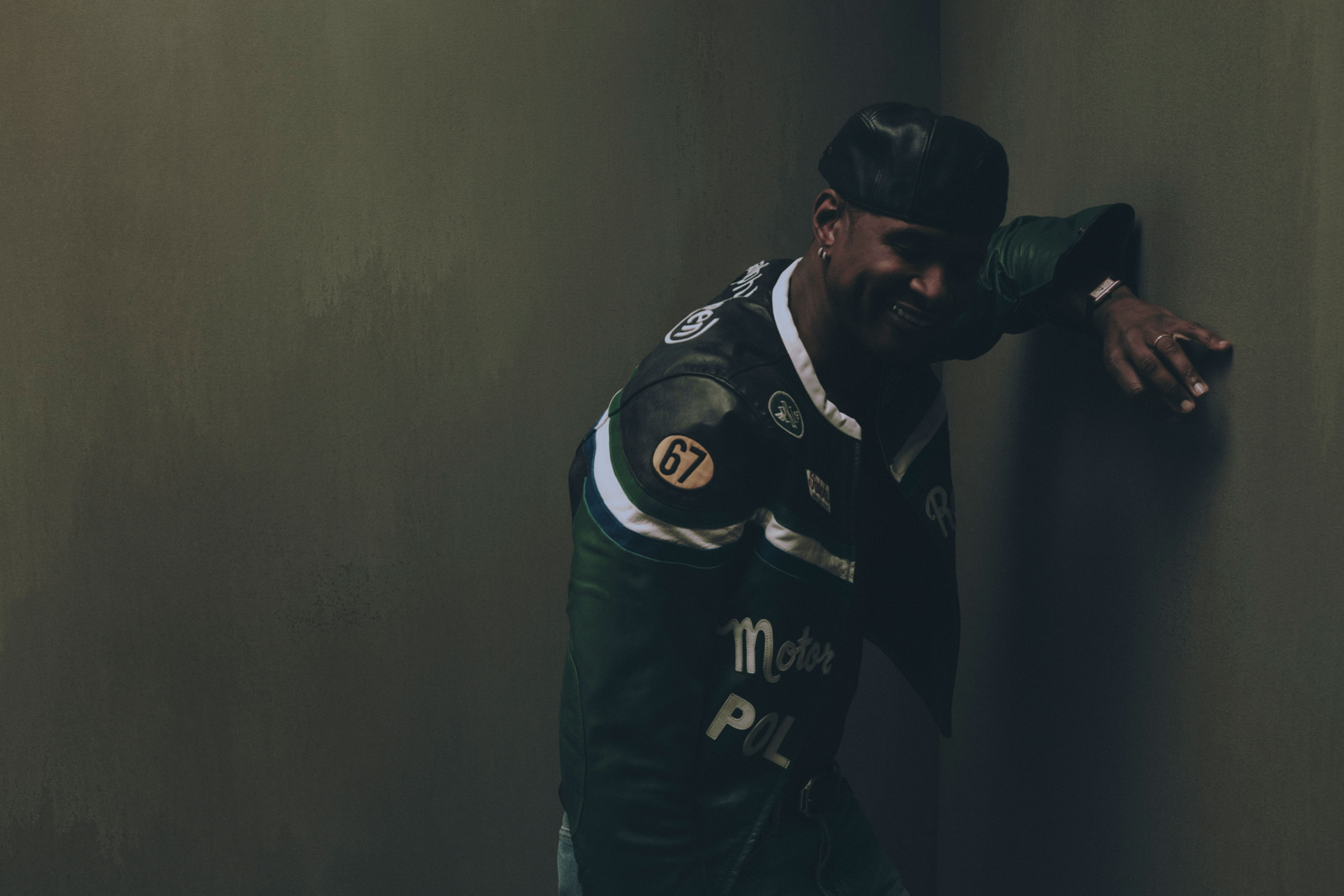
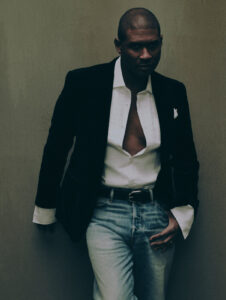
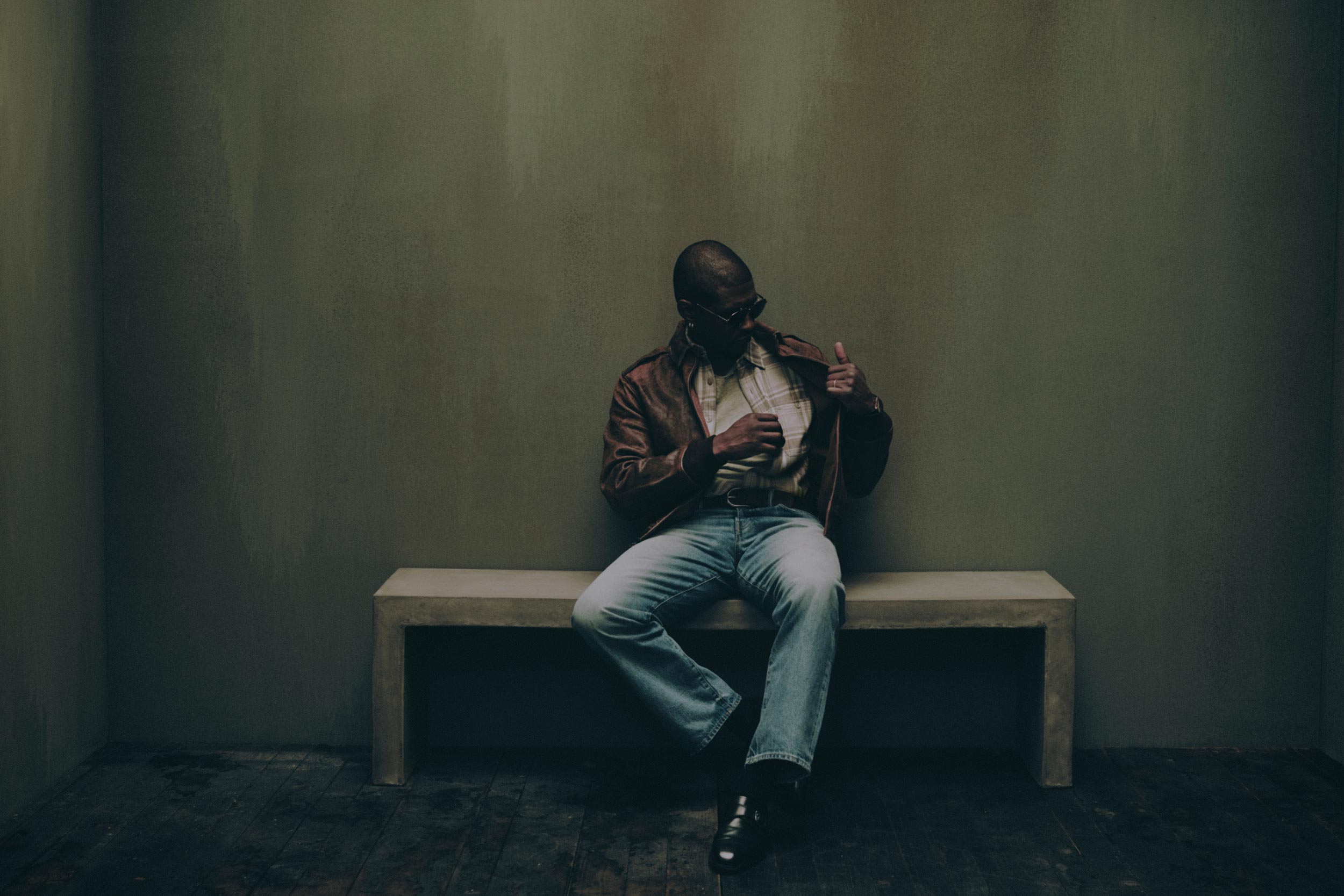
Jacket and jeans by Polo Ralph Lauren. Belt by Ralph Lauren Purple Label. Hat courtesy of THE SOCIETY ARCHIVE. Watch by Cartier.
Rob Franklin: Where in the world are you?
Usher: I’m in Atlanta, Georgia.
Rob: Are you there just between tour dates, or you’re there for a show?
Usher: I’m not currently on tour. I’m touring schools for my kids. I’m in that responsible phase of my life where my kids are transitioning out of high school, and some are going into kindergarten. So I’m touring a lot of schools.
I want to start by talking a little bit about place: It seems like you and I share a couple of places. You live in Atlanta now; you partially grew up in Atlanta. I grew up in Atlanta. I was just listening to “A-Town Girl” on your new album, which obviously riffs on “Uptown Girl,” but with these references to Atlanta, like the Cascade skating rink and Clark Atlanta, which were both significant in my childhood. I’m curious what your relationship is now to Atlanta, to the South—is that where you’re spending most of your time?
Usher: My management is in Los Angeles, but nonetheless, I spend more time in Atlanta than I do L.A. “A-Town Girl” is just really about the cultural things that tie us to this city that allow us to have something not only to celebrate, but that becomes a legacy. And who knows what else those places are going to be. Think about New York City: Skate Key and the Palladium—those places don’t stand as they once did. Or even…what’s the huge lot where all the graffiti artists came for so many years, and they demolished that entire lot?
Rob: In New York?
Usher: Yeah, in New York City. I really wanted to make certain that people understood that Atlanta is my city, but Atlanta is an important staple in culture, and here’s why; These places mean much more than just the idea of, Let’s go to the skating rink with the kids on Saturday. No, it actually is a place of culture. Otherwise, we just know it for strip clubs. We know it for Magic City. We know it for lemon pepper wings, which, by the way, is a part of our culture. You go to New York City, have a slice of pie, or whatever it might be. Or you go to Brooklyn and go to the Brooklyn Museum—things that are very associated with New York culture. Atlanta has the same thing.
Rob: You mentioned New York. Obviously you just did this fragrance with Ralph Lauren, the Ralph’s Club New York fragrance. I watched the promo ad for that where you sing, or you reimagine Frank Sinatra’s “New York, New York.” I just wrote this book that takes place in New York and Atlanta. I was really interested in capturing something about the spirit of both of these places and so I wanted to ask, what does New York mean to you as a place, as an idea, and how did you try to capture the essence of New York in this fragrance?
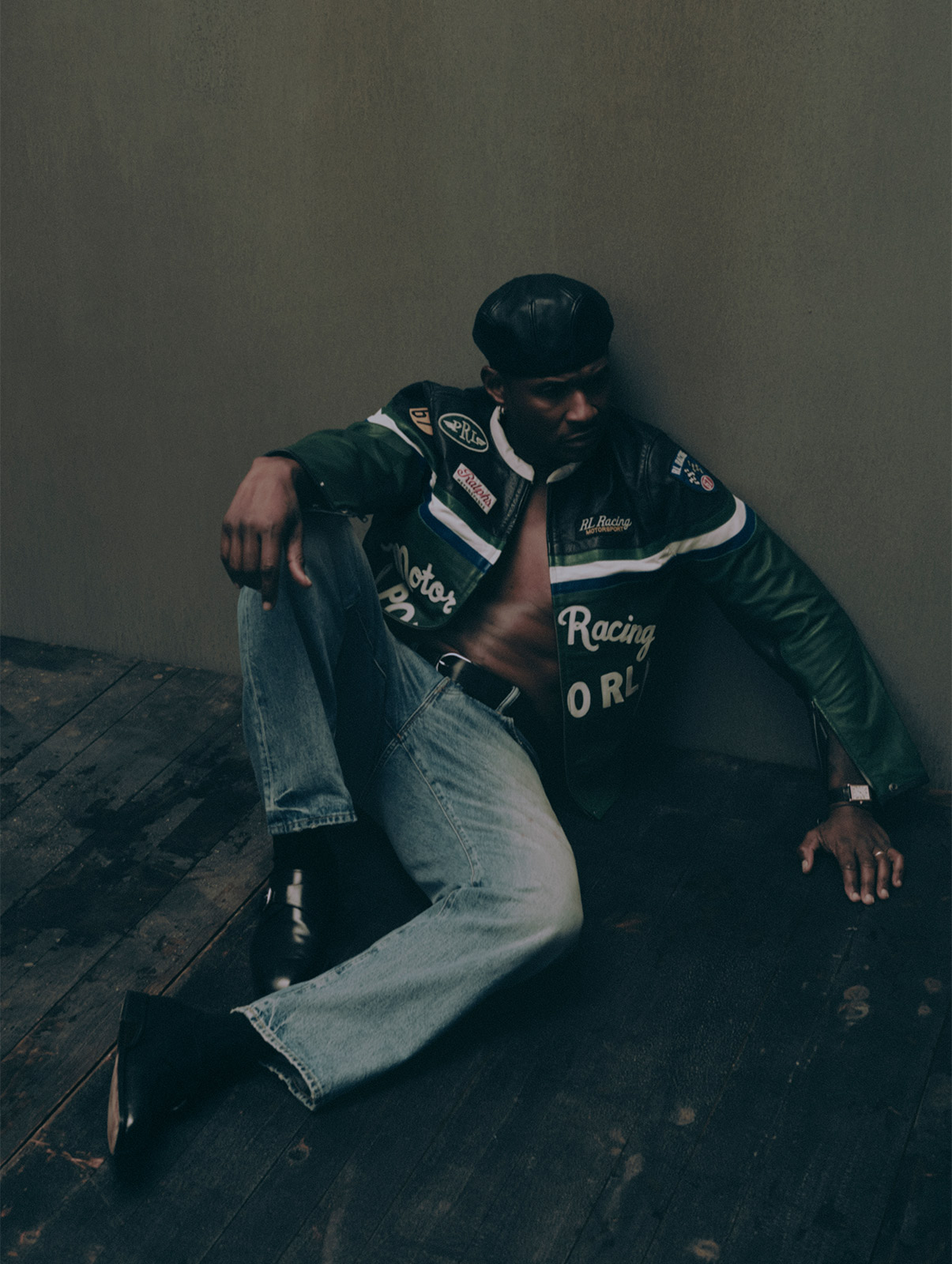
Jacket and jeans by Polo Ralph Lauren. Socks, shoes, and belt by Ralph Lauren Purple Label. Hat courtesy of THE SOCIETY ARCHIVE. Watch by Cartier.
Usher: New York is the start of my career. I made my way back to Atlanta because that’s where I’m from, no different than Tupac. He comes to New York City and something happens, something changes. But there’s something magical that happened in New York, even with Pac, right? Something magical that gave my imagination space to grow. From that, I was able to move forward and be a bit fearless, because I know that there’s a world out here that respects culture.
You’ve also got to realize, when New York was this cultural hub, Atlanta had not established itself yet. So New York gave me a confidence that I didn’t necessarily possess. When you get into the fragrance and what it represents—I saw an opportunity to tell a story. In the same way that I’ve been a storyteller for many years through music, doing the same thing with fragrance. What an incredible opportunity to be able to carry such a prestigious brand—American brand, at that—that I could add to my own legacy, fueling that imagination of people when they put this fragrance on. I wanted them to feel a certain way. I wanted them to feel bold. I wanted them to feel as though they were elevating themselves. Yeah, you already know how you feel, but this can help you go further, as New York does, right? You know what you’re going to wear, you already built an expression. But here is the [punctuation] at the end—the exclamation point. Or is it a period? This fragrance represents that mark of how you feel about yourself.
Rob: I like what you said about boldness, self invention, and self expression, which all feels so quintessential to the spirit of New York. I’ve been thinking a lot about Ralph Lauren, their recent collaborations with Morehouse and Spelman on capsule collections, and the significance of Ralph Lauren within Black American culture. I’d love to hear more about what your relationship with the brand has been over the course of your career.
Usher: Well, with regards to James Jeter and the collaboration between Morehouse and Polo, I, like any other fan of Ralph Lauren, was really excited about that collaboration. So much so that he and I built a relationship. I not only support him as a designer, but want to find more ways to do things that represent Atlanta culture. It’s so great to be able to go up there in New York with Ralph Lauren and have my brothers in the space just saying some of what this culture is. Ralph Lauren is a staple, it is a code, it is a culture in itself. But can it have collaborative moments that represent other cultures? Yes, obviously. If you look at the Morehouse collaboration, that is an indication of it. Even if you look at Ralph’s Club New York with Usher, it’s the same thing. It’s grabbing on to culture and doing what he’s always done. He’s a storyteller. But he goes to places and reference points that feel elevated.
“New York gave me a confidence that I didn’t necessarily possess.”

Shirt and jacket by Ralph Lauren Purple Label.
Rob: I want to talk a little bit about masculinity—how you view the modern man, how you’ve evolved as a man over the course of your career?
Usher: The dichotomy between who we aspire to be and who we have been conditioned to be, is an everyday struggle. The modern man is one who is ready for whatever is coming while also understanding his culture, where he comes from, and celebrating that. Sure I’m inspired by people—like this painting behind me. Romare Bearden was a person who was fully expressive of his culture and didn’t hide away from who and what he is and what he represents. Matter of fact, he celebrated it in a time before the world would understand the importance of what it is. And now you look forward in time, they didn’t really appreciate Romare Bearden in that time. But if you look at Mark Bradford, and Rashid Johnson, and Derrick Adams, they’re all inspired by this man’s work. That’s because anything that’s good represents who you are. When I think about who Frank Sinatra was, as I said, that dichotomy of the balance between the world that he lives in and what he aspires to be.. He was a gangster, and he was associated with gangster shit, you know what I’m saying? He came from it. But he also understood and represented such love and passion. How is that possible? That means you have to be empathetic. You cannot just be the one thing, that you have to put on this mask to be scary or full of bravado, saying, ‘Don’t fuck with me.’ That’s not life.
Rob: You mentioned Derrick Adams and Mark Bradford and other Black male visual artists. I’m curious how you’re inspired by other mediums. You’ve already mentioned other eras of music with Frank Sinatra, but how are you inspired by visual art?
Usher: There are many canvases to paint on. There’s inspiration in what you see, there’s inspiration in what you hear, there’s inspiration in what is perceived to be known, because every person’s perspective is what they see, right? All of those mediums are inspirational to me at this point in my life, because I’ve painted, and I painted a very beautiful picture. But now I’m in a place of collage where I’m adding to it, I’m not taking away from the art that exists. I just want to add to it. I want to embellish. I want to refine. I want to be seen and be recognized as a refined, introspective human being that wants greatness for all people and wants to offer my best. I’ve learned to collect because we’re preserving something important. Put your words on the page. They matter. If I don’t hear your perspective, if I don’t see your words, what’s your existence? A good conversation? Probably inspired somebody. Great. But you wrote that down, and as a result of writing it down, it now becomes history. So it’s up to us to preserve that, to be able to find that beauty in artistic expression. I work with all of them, and I love to just talk with them. Greater than being able to see something that Rashid worked on is to be able to meet him. To go and sit with and build relationship and rapport with Lauren Halsey, and be able to really understand our perspective and what our objectives are, and then also to feel compelled to be supportive and inspire them in making sure that institutions and galleries that carry their work represent the young people who are coming. In addition to them being great, I want to inspire them to remember that the service that you offer to the ‘young you’ is what sustains who you are. How can we come together and create the conversation to be certain that this curation of your art and the art that is there to be seen is about freedom—true freedom. ‘On that canvas, you can’t tell me shit. This is what I feel. This is my perspective.’ On my canvas in music, you can’t tell me shit. This is what I feel. This is what I have gone through. I look at the harsh past of Gordon Parks’s pieces. And I’m like, ‘Wow, that was our reality.’ There’s such beauty in it because of who he is and his perspective. It is a very harsh thing to look at. Those were the conditions of our past. But beautiful to see that and represent it, to understand where it evolved. It’s beautiful, man.
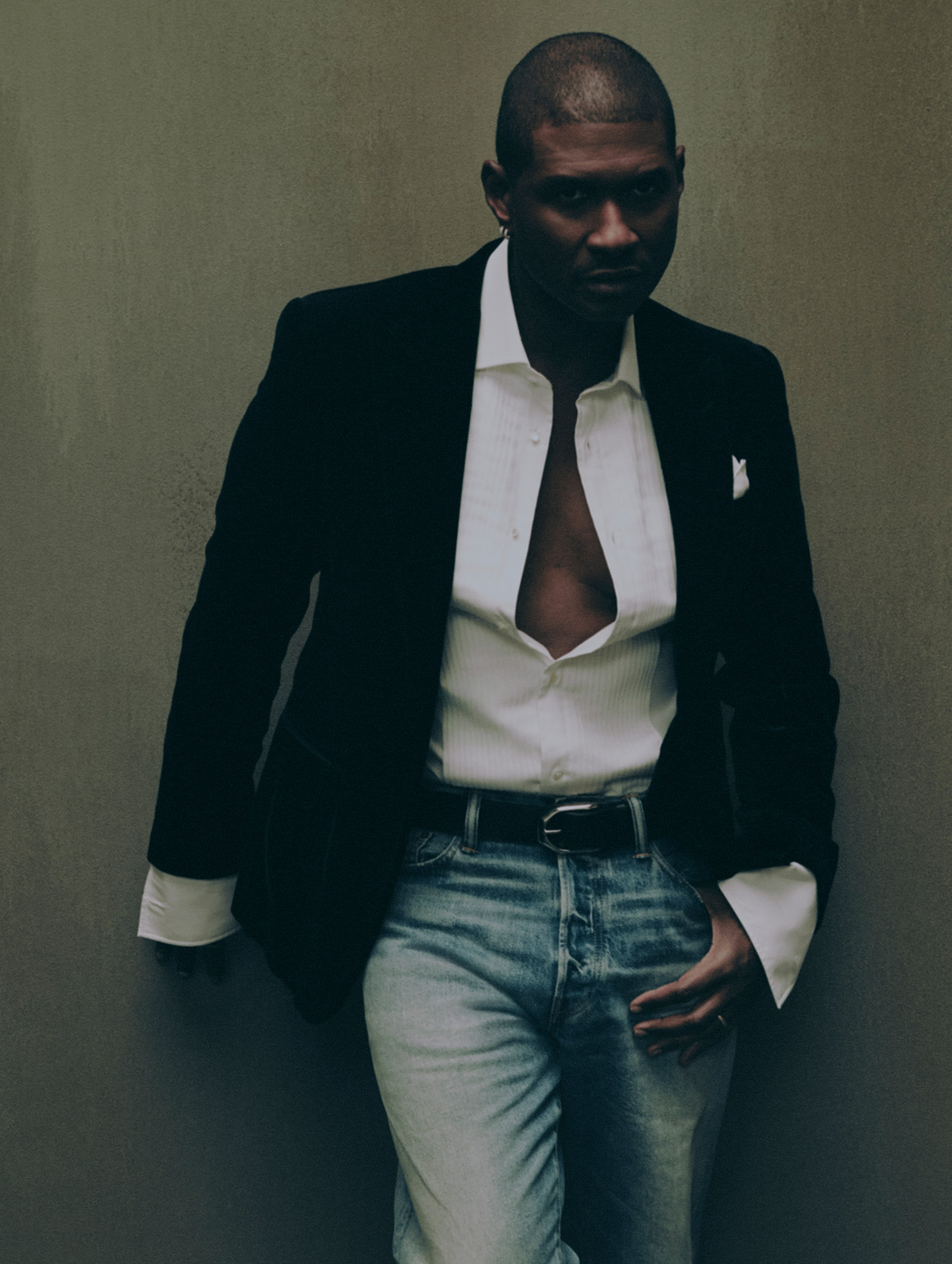
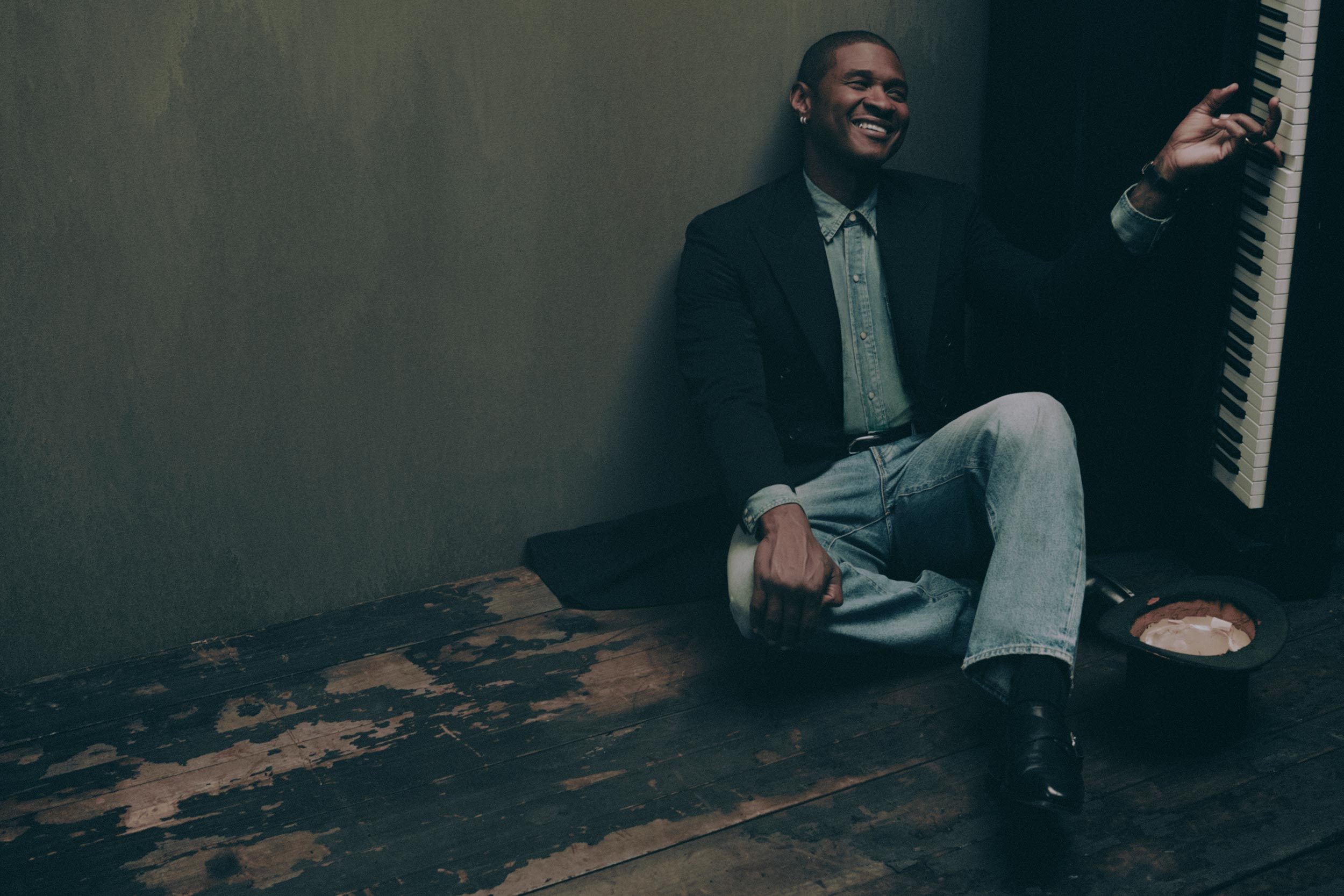
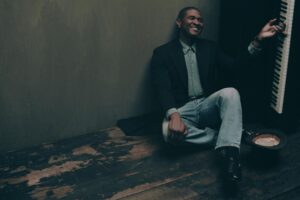
Left: Shirt, jacket, shoes, pocket square, and belt by Ralph Lauren Purple Label. Jeans by Polo Ralph Lauren. Right: Shirt, jacket, socks, shoes, and belt by Ralph Lauren Purple Label. Jeans by Polo Ralph Lauren. Hat courtesy of THE SOCIETY ARCHIVE. Watch by Cartier.
Rob: When I feel stuck writing, I’ll go to a gallery. It’s the only thing that consistently gets me unstuck. Visual artists tend to think in a really different way from writers, but in a way that I find so inspiring and generative.
What struck me during your last answer, and really throughout our conversation, is that you’ve mentioned legacy a lot. I’m at the start of my career. I’ve been thinking a lot about how artists who have staying power manage to reinvent themselves. You know, between books or albums, between eras, while also staying true to something core and authentic about their work; some sort of artistic signature. I wonder how you’ve thought about that, how you strike a balance between reinvention and staying true to a core essence.
Usher: I guess the first thing is staying inspired. But let me first and foremost recognize… ‘start’? [Nominee for the] Andrew Carnegie Medal of Excellence? You’re off to an incredible fucking ‘start.’
Rob: Thank you!
Usher: Barnes and Noble Discovery Prize. I mean, okay, great. It’s that. It is being inspired by the boldness of what’s to come. And if you manage to do something that people feel, then you’ve done your job. I tend to go back to finding freedom, and expression, and feeling compelled to do something. What does that even mean? It’s the feeling of wanting to create, and blaze a trail. And artists give me that. Now, sustaining it is continuing to do that over, and over, and over, and over again, tearing down what it is that you build—not living type cast in the idea of what you’ve succeeded in. Like, okay, it’s great that I have that to go to, because I did it. It was intended to be for that moment, and if I want to go back to that, I can for nostalgic purposes. But I am not who I was, and I am not finished until I am done. You have one life to live and you only live once. You only die once. But the reality is, there’s a freedom in art and artists that makes people feel alive, and, as you say, even reinvigorates your passion for what it is that you may be in the middle of, and reminds you to think differently. To reach more, to be more authentic, to be more true to what you’re feeling in the moment, not to just think about what you’ve done. That is it.

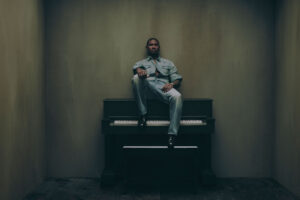
Shirt and shoes by Ralph Lauren Purple Label. Jeans by Polo Ralph Lauren. Watch by Cartier.
Rob: It sounds like what drives that evolution is still having something new to say, and also responding to what’s going on in a new era of your life, a new era of culture, instead of relying on the thing that has given you success in the past, and just hitting the repeat button.
Usher: Let’s be honest. Let’s be real transparent: Black people have never had it easy. We’ve always had to fight to be seen, and also fight for equality. So you got that at the start, right? Don’t get me wrong, it’s not destroying or doing away with what it is that you’ve done, but being motivated, as sure as you are, being guided by your ancestors and the people who spoke truth into you. Your grandparents, your mother, your father, the people who are your motivators, your teachers. They spoke some truth into you, and you carry that truth with you. I guess what I’m trying to say is, for me, at this juncture of my life, life is more of a collage than it is a painting. A grand unveiling of a new piece of art and a new work of art of my life. I am very clear of who I am, where I come from, and what is expected of me based off of people who have come before me. I want to add to that. I want to carry that legacy, to try and make certain that I advocate for Black artists, for our Black lives. Doing pieces in collaboration like this, because it speaks to the type of collaborative nature that we have to have as we are empathetic for the people who are coming behind us. They need space. They need a trail. Let’s blaze it for them. But, yeah, life is a collage. I’m building on top through. I’m building through what it is that I have done. I’m not throwing it away. It is who I am. It is still on the canvas. It’s under this piece that I’m making right now. It is surely the foundation that I stand on to help me be able to know where I come from, so that I know where I need to go.
Rob: It strikes me, this idea of the collage, your career as a collage, where you’re not disavowing the things that you’ve done in the past, even as you work. Experiences like the Vegas residency, the Super Bowl performance—those are probably really good opportunities to showcase the entirety of your career. Did those feel like capstone moments or opportunities to showcase that collage?
Usher: There are the moments that I worked for, like the Super Bowl. That is a legacy that has to be given, granted. Not everybody gets it. You gotta work your ass off in order to get it; you have to put in the work. And then there is the place of discovery, which I relate Las Vegas as. Most people would have said, ‘That’s where artists go when they’re kind of finished, and they want to get as much money as they possibly can and try and pull in people from their past.’ It doesn’t have to be that. It wasn’t that for me. It was a rediscovery in many ways, but I also want to push the notion that that place has always been a place for discovery. Maybe just for me, but going there, I was always able to be inspired. The other half is to know that the world should savor our genius, and what we put time and essence in. That’s really up to them. If they don’t, then that means we’ve got to keep working for it. But that is the thing that really defines artistry. Are you done? No? Will you continue to recreate and redefine?
“You have one life to live and you only live once. You only die once. But the reality is, there’s a freedom in art and artists that makes people feel alive.”
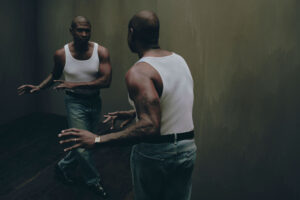
Rob: How do you think about image as part of that? I’ve seen the photo shoot for Document, and I feel like there’s a timelessness to those images. There’s also a modernity. It feels like maybe a new look. This is kind of a version of the same question, but as far as the image you’re projecting, how do you think about timelessness versus modernity?
Usher: Part of that is left up to Gabriel and what he saw and what he was shooting. There’s something really important about what Chris Robinson created [with the Confessions video], because it was expressive art. Right? That video, some of the imagery that you saw which was recreated, there was an expression that happened there for me. Really it was my first time ever like, Hey, will you judge what I have? What if I have nothing, if my canvas is empty this time? If it’s just me, and it’s me being extremely vulnerable with Confessions. I thought it was very brilliant of [Gabriel] to bring me back to that first time that I was expressive and I wasn’t trying to sell something. I was just being brutally honest about who and what I was, where I was, and what I had to offer. It was a very interesting choice for us to start there. Then, of course, the fashion, the choice of wardrobe, gives me an ability to introduce something to an audience that they weren’t there for. Nostalgic to some, because they’re like, ‘Wait a minute. Damn, does this guy even fucking age? I feel like I’m looking at a time capsule!’ But for the new eye, the new consumer, they’re like, ‘This feels fresh. This feels authentic in a way that I haven’t seen this person in a long time.’
Rob: When Confessions came out that was obviously a huge cultural moment, and it was very rare to see a musician of your stature being that vulnerable and honest. I’m curious what moments in your career have you felt most vulnerable, and what, artistically, has come out of that place of vulnerability?
Usher: Every time I do it, I’m vulnerable; exposed to opinion. And while I’m not necessarily doing it for the opinion, the accolade of celebrating something that is a work of art for me, is important.
Rob: Especially because it still is an authentic expression. It’s not just a product.
Usher: That’s the hard part, because you’re in between. You know why you’re doing this. You know why you signed that deal with that record company, or you invested money in it. It’s a business. But that very fine line between artistic expression and creating a product is a really, really fine line. It takes boldness to be able to be expressive and say, ‘This is my offering. This is where I’m at. This is how I feel. This is what I have to offer.’ Follow me and join me in this next voyage, or this moment. Or if you want to listen to those older songs, listen to them! But this is the next chapter. I’m pretty certain that artists, even like Beyonce—I’m going to completely go after something that was aspirational as a kid. I wanted to be a country artist, because I love country music. Made an entire country album. Fuck it. Won Country Album of the Year. And, by the way, has never won Album of the Year. That’s passion, that’s art.
Rob: And that’s risk taking! I mean, I think about that with writing, where there can be a certain appeal to trying to recreate and improve upon the thing that you just did, and do it a little bit better, versus doing something completely new. But I think at least for me as an artist, it only feels exciting to try to do something I’m not totally sure I can pull off. That is part of what is exciting about making work.
Usher: The area of the unknown.
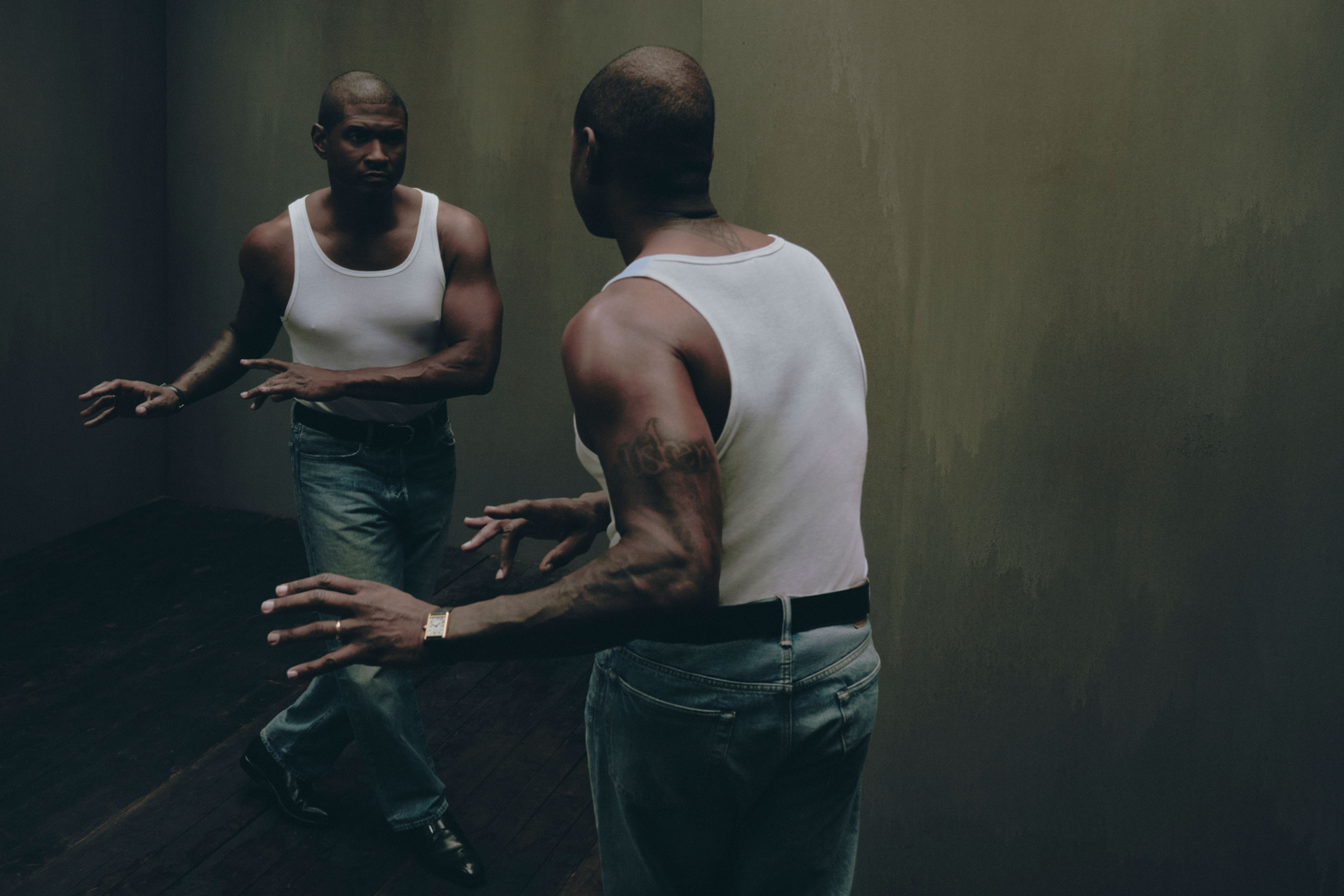
Top: Tank top courtesy of THE SOCIETY ARCHIVE. Jeans by Polo Ralph Lauren. Shoes and belt by Ralph Lauren Purple Label. Watch by Cartier. Bottom: T-shirt courtesy of THE SOCIETY ARCHIVE. Jacket and jeans by Polo Ralph Lauren. Shirt, socks, shoes, belt, and sunglasses by Ralph Lauren Purple Label.
Rob: Back to this idea of scents, and how scents can linger, what idea or what legacy do you want to leave behind? What impression do you hope to leave behind?
Usher: That you can do it too. And you can do it the way that you want to. And though you have to be mindful that there’s an audience out there, that doesn’t necessarily have to weigh on the truth of you living in this moment of your expression. I hope to be a motivation to others who are like me. Who come from where I come from, who feel how I feel, who are fearful, or human. Who have to deal with the dichotomy of the beast that is inside of all of us that wants to tear through it because they’re angry, yet they have to remain in control, knowing that they are not in control. If I put it simply, it would be that you can do it too.
Rob: I love that.
Usher: I think that it is majorly important to speak about the support of Black artists and Black art, and how meaningful and important it is for not only inspiration, but just legacy. This is a major chapter of my life. Even collaborating with Gabriel Moses, the choice is based off of being supportive of Black art. It’s not a coincidence that [this Romare Bearden painting is] in the background. I want you to understand that it’s important for us to keep that on our walls. It’s important for us to invest in that. Let it be an indication of how important it is for us to make certain that this next generation not only understands how to monetize and create, but to preserve. It’s a major point for me. I really do think that that is important. I didn’t understand the importance of it until I actually spent time in New York. Being able to go to the galleries and meet with artists and go into those social circles—that’s what makes New York so important, and amazing.
Rob: The collaboration aspect.
Usher: Yeah, collaboration is important. And institution for us is important.
Rob: I like how you speak about legacy, almost like more of a collective legacy, rather than just an individual legacy. Like what you were saying about the painting behind you, that maybe [Bearden] didn’t achieve quote/unquote fame in his lifetime, but then he inspired another generation of artists, and that is his legacy, right?
Usher: Romare Bearden is not revered in the same way that Basquiat is, but without Romare Bearden, you don’t have Basquiat! You don’t have Black Futurism, you don’t have Mark Bradford. You don’t have Jina Valentine. You don’t have all of these incredible artists. You don’t get a chance to have access to that. But imagine if we had an institution that created a space for him?

Tank top courtesy of THE SOCIETY ARCHIVE. Jeans by Polo Ralph Lauren. Socks, shoes, and belt by Ralph Lauren Purple Label. Watch by Cartier.
Rob: That is probably the thing I love most about New York, just feeling like I am in community with other artists, both other writers, as well as artists in other mediums. Just the exchange of ideas makes art-making feel less lonely, and it also makes it feel constantly exciting. I’ll say that I was with some friends last night who were at the Studio Museum Gala, and they said seeing you there was a highlight.
Usher: Yeah, it was cool, man.
Rob: I was like, ‘Oh yeah, I think I’m actually talking to him tomorrow.’ It looked great. I love the Studio Museum.
Usher: It was really cool to run into people like Karon Davis, having not seen her in so long. But to see artists and friends and just be…we’re not here to create. We’re literally here to have fun together. It’s not often that you go to a party, by the way, where everybody gets on the dance floor. I thought that was beautiful. People don’t just come here to eat the food and listen to whatever the presentation is, or the acceptance of an award. They literally go and have a good time. I’m so accustomed to the opposite. I didn’t want to leave. They had to pull me off the dance floor.
Hair Shawn “Shizz” Porter. Make-up Felicia “Lola” Okanlawon. Set Design Elysia Belilove at 11th House Agency. Lighting Director Darren Karl-Smith. Digital Technician YC Dong. Photo Assistants Sergio Avellaneda, Jackson Verges. Stylist Assistants Jody Bain, Morgan Jimenez. Scenic Painter Kirsten Dempsey. Tailor Susan Balcunas at Lars Nord Studio. Set Design Assistants Rayan Mustafa, Vango Jones. Production Director Lisa Olsson Hjerpe. Production Concrete Rep Ltd. On-set Producer Leone Ioannou at Pony Projects. Production Assistant Jeff Cecere. Retouching The Hand of God. Special thanks to The Chamber Group.